
What a Bad Turbocharger Sounds Like
Signs of a Bad Turbocharger: Sounds You Should Never Ignore
Quick Summary
Bad turbo sounds are one of the earliest warning signs of failure. The most common noises include a high-pitched whining or siren sound, a dentist-drill–like whir, grinding, rattling, or abnormal fluttering. Each of these bad turbo sounds points to a specific issue—usually worn bearings, shaft play, boost leaks, or internal damage. If the sound increases with RPM or boost, that’s a strong indicator that the turbo is failing. Catching these bad turbo sounds early can prevent major engine damage and expensive repairs.
What Does a Bad Turbocharger Sound Like?
In my experience, a turbocharger almost never fails silently. It gives you clear warning signs—if you know what to listen for. The key is recognizing bad turbo sounds and understanding what each one means.
A healthy turbo produces a smooth, controlled whistle. But when that sound changes—gets louder, sharper, or harsher—that’s when I start diagnosing.
The Most Common Bad Turbo Sounds I Hear
High-Pitched Whining or Siren Noise — This is the most common of all bad turbo sounds, and it’s usually the first one I notice.
It sounds like:
• A rising siren
• A loud, sharp whine that increases with RPM
This noise is almost always caused by worn bearings or shaft imbalance. As the turbo spins, the shaft no longer stays centered, creating that distinct whining tone.
Dentist Drill or Metallic Whirring — This is a more aggressive version of a whine and one of the more serious bad turbo sounds. This typically means the bearings are severely worn and the compressor wheel may be starting to contact the housing. At this stage, I consider the turbo to be in advanced failure.
Grinding or Rattling Noise — If you hear grinding, you’re beyond early warning signs.
This type of bad turbo sounds includes:
• Metal scraping
• Rattling under boost
This usually means internal components are physically contacting each other or breaking apart. I’ve seen turbos in this condition fail catastrophically, sending debris into the engine.
Fluttering or Chuffing Sound — Not all fluttering is bad—but it can be.
This is one of the more misunderstood bad turbo sounds.
It sounds like:
• Rapid fluttering when letting off the throttle
• A “pssh-pssh-pssh” sound
Sometimes this is normal (blow-off valve operation), but if it’s louder than usual or happens under load, I start looking for boost leaks or control issues.
Hissing Sound Under Boost — A hissing sound is often mistaken for turbo failure, but it’s usually related to airflow.
This type of bad turbo sounds includes:
• Air escaping under pressure
• A steady “ssssss” noise
This typically points to a boost leak in hoses, intercooler piping, or clamps. While the turbo itself may still be good, the system isn’t functioning properly.
What Causes Bad Turbo Sounds?
From my experience, most bad turbo sounds can be traced back to a few root causes.
• Worn Bearings — The number one cause of turbo noise.
Lack of lubrication — This leads to shaft play and imbalance, which creates whining and grinding noises.
Foreign Object Damage — Debris entering the turbo can quickly destroy it.
• Bent compressor blades
• Imbalance
• Sudden onset of noise
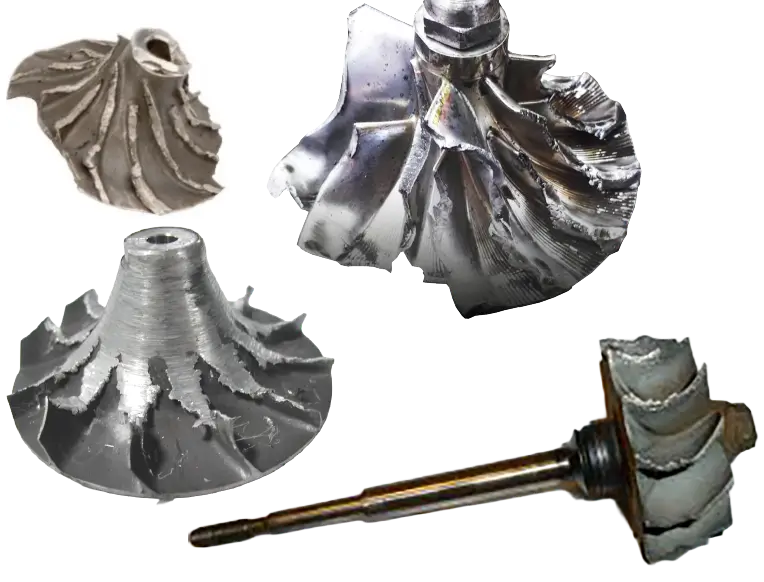
Examples of damaged compressor wheels in a turbocharger
Boost and Airflow Issues — Improper pressure or airflow can also create abnormal sounds.
• Boost leaks
• Faulty wastegates
• Intake restrictions
How I Diagnose Bad Turbo Sounds
I never rely on sound alone—I confirm it with inspection.
Step 1: Match sound to RPM — Turbo-related bad turbo sounds will increase with engine speed and boost.
Step 2: Inspect intake system — I check for oil residue and loose connections.
Step 3: Check shaft play — Any excessive movement confirms bearing wear.
Step 4: Evaluate boost performance — Low or inconsistent boost supports the diagnosis.
Can You Drive With Bad Turbo Sounds?
Technically, yes—but I don’t recommend it.
Driving with a bad turbo can lead to:
• Complete turbo failure
• Oil contamination
• Engine damage
Final Thoughts
Turbochargers don’t fail overnight—they warn you first. The problem is that most drivers don’t recognize the warning signs.
If you learn to identify bad turbo sounds, you can diagnose problems early, avoid unnecessary repairs, and protect your engine from serious damage.
©, 2026 Rick Muscoplat
Posted on by Rick Muscoplat