
What happens if you hit a curb with your car
What gets damaged when you hit a curb?
Quick Summary
If you’re wondering what happens if you hit a curb with your car, the answer depends on how fast you were traveling and the angle of impact. Even a seemingly minor curb strike can damage your tire, bend your wheel, throw the alignment out of specification, or bend steering and suspension components. In more severe cases, a curb impact can damage a wheel bearing, CV axle, steering knuckle, or even the transmission.
Key takeaways from this article:
• Tie rods and control arms are among the most commonly damaged suspension parts.
• An off-center steering wheel almost always indicates steering or suspension damage.
• A tire sidewall can fail even if there’s no immediate air leak.
• Bent wheels often cause vibration at highway speeds.
• A damaged wheel bearing may not make noise until days or even weeks after the impact.
• If your vehicle pulls, vibrates, leaks fluid, or makes unusual noises after striking a curb, have it inspected before continuing to drive.
I’ve inspected hundreds of vehicles after curb impacts over the years, and one thing surprises drivers more than anything else—they expect to see obvious damage. Instead, the damage doesn’t look bad. Then, a week later, the owner notices uneven tire wear or a humming noise that wasn’t there before.
That’s because the force from hitting a curb doesn’t simply stop at the tire. It travels through the entire wheel assembly and into nearly every steering and suspension component attached to that wheel.
Modern vehicles are engineered to be lightweight for better fuel economy. That means many suspension parts are made from aluminum or thin high-strength steel. Those materials perform wonderfully under normal driving conditions, but they’re not designed to absorb the sideways shock load of striking a concrete curb.
Whether you clipped a curb while parking or hit one at 35 mph trying to avoid another vehicle, it’s important to understand what may have been damaged before continuing to drive.
Why Hitting a Curb Causes So Much Damage
When your tire strikes a curb, the wheel is suddenly forced sideways while the rest of the vehicle continues moving forward. The suspension is loaded far beyond what it experiences during normal driving.
The impact force travels through:
• Tire
• Wheel
• Wheel bearing
• Steering knuckle
• Tie rod
• Steering rack
• Control arm
• Ball joints
• Strut
• CV axle
• Transmission or differential (in severe impacts)
The faster you were traveling, the farther that force travels into the vehicle.
Tire Damage Is Usually the First Casualty
One of the most common types of damage from hitting a curb is hidden tire damage. Most drivers immediately look for a flat tire.

This image shows a tire bubble caused by a broken belt
Unfortunately, that’s only one possibility. I’ve seen countless tires that held air perfectly but had internal belt damage severe enough to require immediate replacement.
A sidewall bubble is especially dangerous because it means the internal cords have broken. The tire may survive another hundred miles—or it may suffer a catastrophic blowout tomorrow. If you notice any bulge in the sidewall, replace the tire immediately.
Look carefully for:
• Sidewall bubbles
• Deep cuts
• Chunks missing from the rubber
• Cord material showing
• Bulges
• Cracks near the bead
Symptoms of Tire Damage
• Steering wheel vibration
• Vehicle pulling
• Slow air leak
• Visible sidewall bubble
• Uneven tread wear
Bent Wheels Are More Common Than Most Drivers Realize
The wheel absorbs nearly as much force as the tire. Steel wheels may bend without cracking. Aluminum alloy wheels are different. Once aluminum bends, its structural
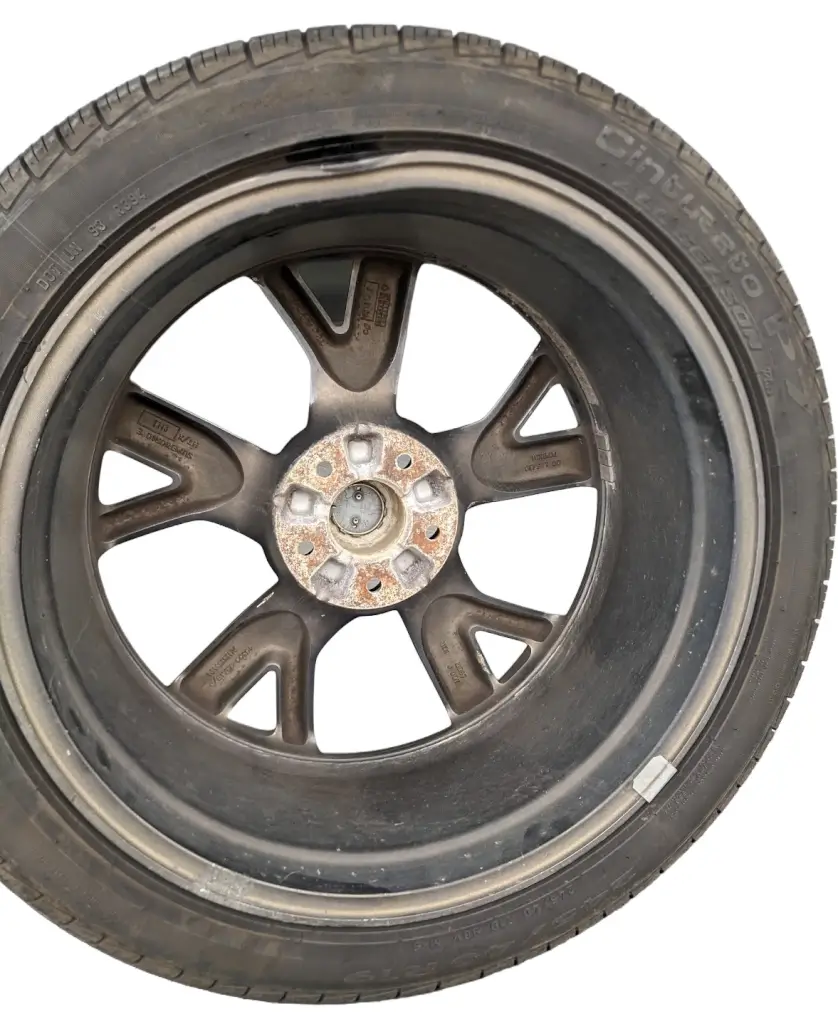
This is an example of a bent aluminum wheel
strength has already been compromised.
Sometimes you’ll notice:
• Vibration between 45 and 70 mph
• Air leaking around the bead
• Visible flat spot on the rim
• Steering shake
Many bent alloy wheels appear perfectly round until they’re mounted on a balancing machine. That’s why I recommend checking wheel runout after any significant curb strike.
Tie Rod Damage Is Extremely Common
If there’s one steering component I expect to find bent after a curb strike, it’s the tie rod. The tie rod controls the direction of the front wheels.
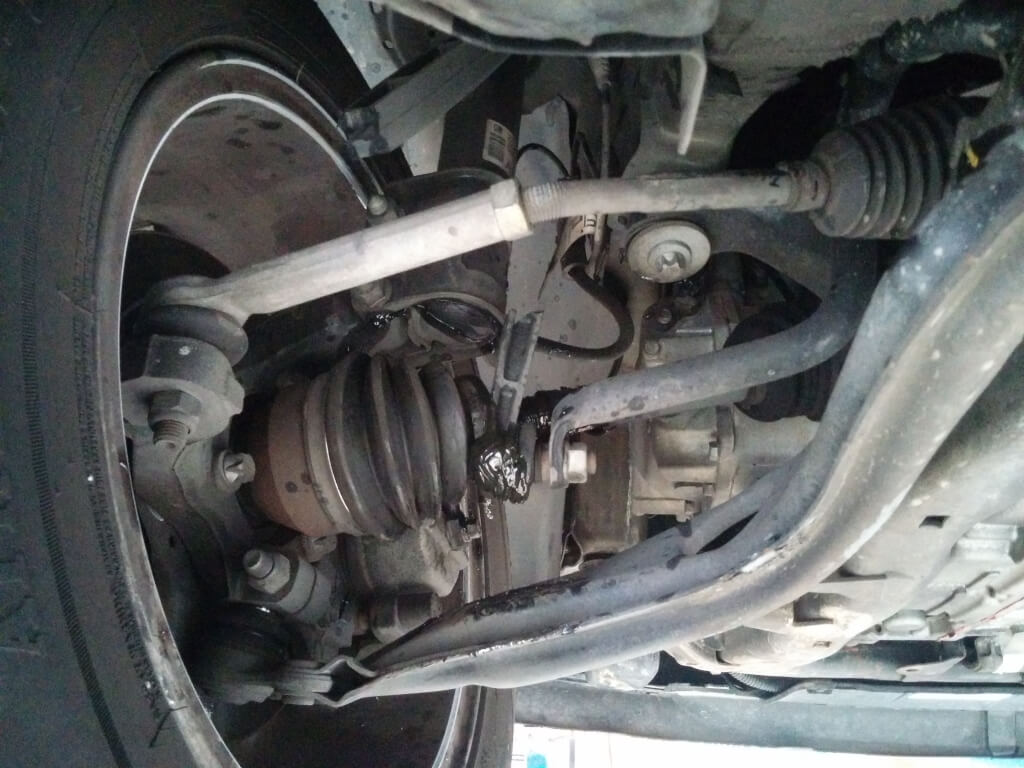
This curb impact bent the control arm and tie rod
Because it’s relatively slender, it’s designed to deform before larger and more expensive steering components fail. Even a slightly bent tie rod changes the wheel alignment.
That’s why one of the biggest clues after hitting a curb is an off-center steering wheel.
Signs of a Bent Tie Rod
• Steering wheel no longer centered
• Vehicle pulls left or right
• Feathered tire wear
• Loose steering feel
• Vehicle wanders on the highway
Many drivers ask if they can simply straighten a bent tie rod. The answer is no, it must always be replaced.
Control Arms Frequently Bend During Curb Impacts
The lower control arm connects the steering knuckle to the vehicle frame. Its job is to hold the wheel in the correct position while allowing suspension movement.
Unfortunately, it’s also one of the first suspension components damaged during a curb strike.
Many manufacturers now use aluminum control arms because they’re lighter.
• That’s great for fuel economy.
• Not so great when you hit a curb.
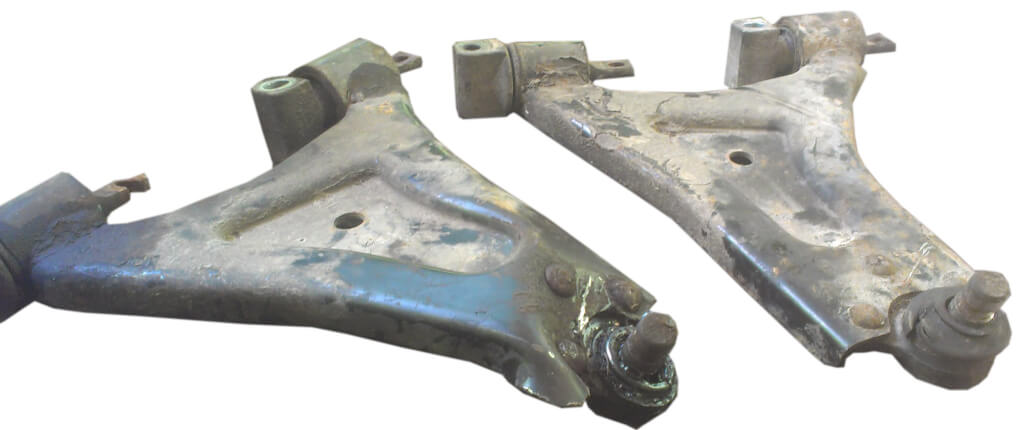
Bent control arm
A bent control arm changes:
• Camber
• Caster
• Wheelbase
• Tire contact patch
Even a small bend can ruin a brand-new tire in just a few thousand miles.
Symptoms of a Bent Control Arm
• The car pulls while driving
• Uneven tire wear
• Steering wheel off center
• Clunking over bumps
• Alignment impossible to correct
If your alignment technician says the alignment “won’t come into specification,” a bent control arm is often the reason.
A Bent Strut Can Cause Poor Handling
The strut supports vehicle weight while controlling suspension movement. A hard curb impact can bend the strut housing or even damage the internal piston. Unlike a leaking strut, a bent strut isn’t always obvious.
The symptoms may include:
• Vehicle leans during turns
• Steering feels unstable
• Excessive bouncing
• Tire cupping
• Vehicle drifts on the highway
I’ve seen vehicles where the only clue was that the steering wheel no longer returned to center after making a turn. That’s because the bent strut changed the steering geometry.
Steering Knuckle Damage Is Less Common—but Much More Expensive
The steering knuckle is one of the strongest parts of the front suspension.
It holds:
• Wheel bearing
• Hub assembly
• Brake components
• Tie rod
• Ball joint
• Strut
Because it’s built from heavy cast steel or aluminum, it usually survives moderate curb strikes. However, a severe impact at 30 mph or more can bend or even crack the knuckle. A cracked steering knuckle is never repairable. Replacement is the only safe option.
This type of damage almost always requires a professional suspension inspection before the vehicle is safe to drive.
Signs of Steering Knuckle Damage
• Severe alignment problems
• The wheel tilted inward or outward
• Metal cracking sounds
• Brake rotor no longer centered
• Suspension geometry cannot be corrected
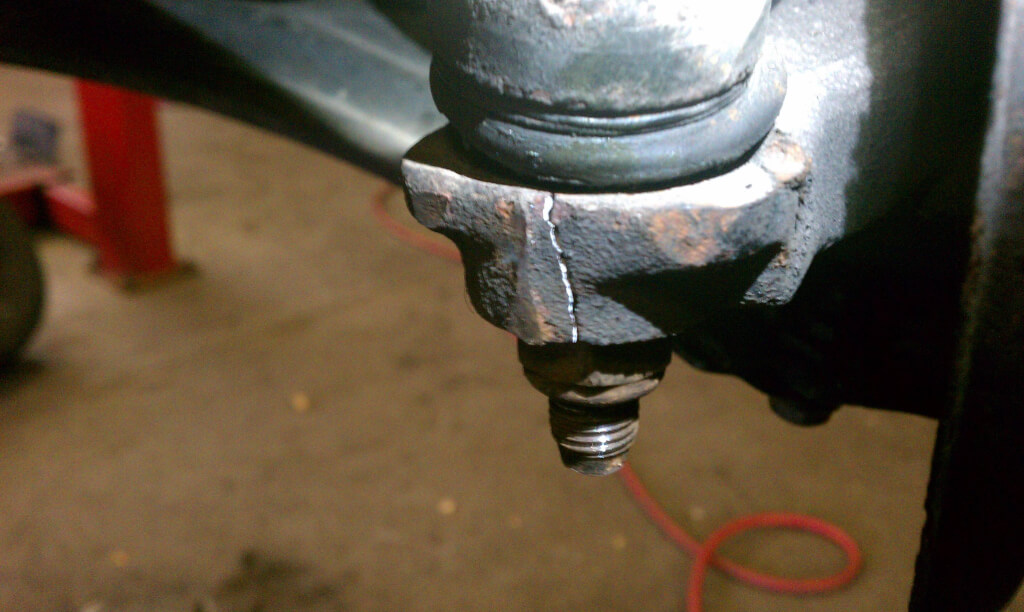
This severe curb impact cracked the steering knuckle. A genuine Honda steering knuckle replacement costs about $450 plus installation and alignment, for a total cost of about $1,000
Wheel Bearing Damage Often Shows Up Days or Weeks Later
One of the biggest mistakes I see after a curb impact is assuming everything is fine because the vehicle drives normally afterward. That’s especially true with wheel bearings.
Striking a curb can create tiny dents in the bearing races, a condition called brinelling. Those dents may not cause any immediate symptoms. However, as the bearing continues to rotate over the damaged areas, the surfaces begin to wear, and the bearing gradually becomes noisy.
I’ve had customers insist the wheel bearing couldn’t have been damaged because the humming noise didn’t start until two weeks after they hit the curb. That’s actually very common.
Symptoms of a Damaged Wheel Bearing
• Low humming or growling noise that gets louder with speed
• Noise changes when turning left or right
• Steering wheel vibration
• ABS warning light (in some vehicles)
• Excessive wheel play
If you hear a humming noise after hitting a curb, don’t ignore it. A failed wheel bearing can eventually damage the hub assembly or allow excessive wheel movement.
CV Axle Damage Can Be Expensive
Front-wheel-drive and all-wheel-drive vehicles use CV (constant velocity) axles to transfer engine power to the wheels while allowing the suspension to move.
A severe curb strike can:
• Bend the axle shaft
• Damage the inner CV joint
• Tear the CV boot
• Force the axle deeper into the transmission or differential
If the axle is shoved inward with enough force, it can even damage transmission bearings or the differential housing.
Signs of CV Axle Damage
• Clicking while turning
• Vibration during acceleration
• Grease thrown around the suspension
• Torn CV boot
• Clunk when shifting into Drive or Reverse
A damaged CV boot may not cause immediate problems, but once grease escapes and dirt enters the joint, failure isn’t far behind.
Can Hitting a Curb Damage Your Transmission?
Many drivers are surprised when I tell them the answer is yes. Most curb strikes don’t reach the transmission, but a high-speed impact can.
Here’s how it happens:
The wheel strikes the curb, forcing the control arm and steering knuckle rearward. That movement pushes on the CV axle, which transfers the force directly into the transmission or transaxle.
Possible damage includes:
• Output shaft bearing damage
• Differential damage
• Transmission case cracks
• Axle seal leaks
• Warning Signs
• Transmission fluid leaking
• Delayed shifting
• Harsh gear engagement
• New whining noises
• Vibration under acceleration
If any of these symptoms appear after a curb strike, stop driving and have the vehicle inspected immediately.
Modern Vehicles May Need ADAS Recalibration
Today’s vehicles rely on advanced driver assistance systems (ADAS) such as:
• Lane Keeping Assist
• Adaptive Cruise Control
• Automatic Emergency Braking
• Lane Departure Warning
Even if no suspension parts are visibly bent, changing the wheel alignment can alter the aim of cameras and radar sensors.
After replacing suspension or steering components—or even after a significant alignment correction—many manufacturers require recalibration of these systems.
Skipping this step can result in:
• False collision warnings
• Lane centering problems
• Cruise control malfunctions
• Incorrect emergency braking operation
If your vehicle is equipped with ADAS features, ask your repair shop whether recalibration is required after the repair.
Hidden Damage Can Take Weeks to Appear
One reason I recommend having your vehicle inspected after a significant curb strike is that some damage isn’t immediately obvious.
Common delayed failures include:
• Wheel bearing noise
• Tire belt separation
• Bent wheel vibration at highway speeds
• Slow air leaks
• Loose suspension fasteners
• Premature tire wear
• Damaged ball joints
• Worn bushings
I’ve seen vehicles drive perfectly for several hundred miles before symptoms began to appear.
That’s why an inspection now is far less expensive than replacing tires prematurely or dealing with a breakdown later.
What to Check Immediately After You Hit a Curb
Whenever someone asks me what to check after hitting a curb, I recommend the same inspection routine.
1. Inspect the Tire: Look for:
• Sidewall bubbles
• Cuts
• Missing rubber
• Bulges
• Low air pressure
Any sidewall damage usually means the tire should be replaced.
2. Inspect the Wheel: Check for:
• Bent rim flange
• Cracks
• Missing chunks
• Air leaks
• Fresh gouges
Even cosmetic-looking damage can hide a bent wheel.
3. Drive Slowly: Pay attention to:
• Pulling
• Vibration
• Wandering
• Off-center steering wheel
These symptoms usually indicate steering or suspension damage.
4. Listen Carefully: New sounds often reveal hidden problems. Watch for:
• Humming
• Grinding
• Clicking
• Clunking
• Rubbing
Each noise point toward a different damaged component.
5. Look Under the Vehicle: Check for fluid leaks such as:
• Engine oil
• Transmission fluid
• CV joint grease
• Coolant
• Brake fluid
Never ignore fresh leaks after striking a curb.
When Is It Safe to Keep Driving?
A very minor curb tap while parking may leave nothing more than a scratched wheel. However, I recommend stopping immediately if you notice any of the following:
• Steering wheel no longer centered
• Vehicle pulls to one side
• Tire losing air
• Loud humming or grinding
• Suspension clunk
• Fluid leak
• Wheel visibly tilted
• ABS, Stability Control, or Steering warning lights
Continuing to drive with these symptoms can turn a relatively inexpensive repair into thousands of dollars in additional damage.
When Should You Have the Car Towed?
I recommend towing the vehicle instead of driving it if:
• The tire has sidewall damage.
• The wheel is visibly bent.
• The steering wheel is badly off-center.
• The vehicle pulls hard.
• You hear grinding or metal-on-metal noises.
• Transmission fluid is leaking.
• A suspension component appears bent.
• The wheel is rubbing the fender or suspension.
The cost of a tow truck is almost always less than the cost of replacing a destroyed tire, damaged transmission, or failed wheel bearing.
Typical Repair Costs After Hitting a Curb
Repair costs vary depending on the vehicle and the severity of the impact, but these are common ranges:
Component Typical Repair Cost
Tire $175–$450
Wheel $250–$900
Wheel alignment $120–$250
Tie rod $250–$700
Control arm $500–$1,200
Strut $600–$1,500
Wheel bearing $450–$900
Steering knuckle $900–$1,800
CV axle $450–$900
Steering rack $1,500–$3,500
Transmission damage $2,500–$7,000+
As I often tell customers, the alignment is usually the least expensive part of the repair. It’s the bent components discovered during the alignment inspection that increase the final bill.
Does Insurance Cover Curb Damage?
The good news is that if you carry collision coverage, damage from hitting a curb is generally covered as an accident. You’ll have to pay your collision deductible, and it will count as an at-fault accident, which may raise your rates in the future.
Before filing a claim, compare the repair estimate with your deductible and consider whether the claim is worthwhile.
A Professional Inspection Can Save You Money
One final piece of advice I always give drivers is this: don’t judge the damage by how the car feels during the first few miles.
I’ve seen vehicles that seemed perfectly fine after a curb strike, only to return a month later with ruined tires, noisy wheel bearings, or severely bent suspension parts.
A thorough inspection, wheel alignment check, and careful road test can identify problems before they become much more expensive repairs.
If you’ve hit a curb hard enough to wonder whether something was damaged, it’s worth having the vehicle inspected. In many cases, catching a bent tie rod or damaged control arm early can save you from replacing a set of tires—or even a transmission—down the road.
©, 2015 Rick Muscoplat
Posted on by Rick Muscoplat