
What the battery light means on your dash
Battery Light On? Here’s What It Means and What to Do
The battery light on your car’s dashboard is an essential indicator of your vehicle’s charging system health. This article delves into what it means when the battery light is on, the common causes, and what steps you should take to address the issue.
Understanding the Battery Light
The battery light is a part of your car’s charging system warning indicators. When you turn the ignition on, all dashboard lights, including the battery light, briefly illuminate as a test to show the warning light bulb is functioning correctly. However, if the battery light stays on or comes on while driving, it signals a problem with the vehicle’s electrical charging system.
The problem could be as simple as a broken drive belt or corroded battery terminals. Or you could have a faulty alternator, a dead car battery, or even a wiring problem. Here’s how to find out what the battery light means on your car.
If your battery light comes on while driving, power down and pull over
Since the battery light indicates a charging system failure, you should turn off all unneeded electrical accessories like the heated mirrors and rear window defogger, as well as the blower motor and AC. Next, carefully pull off the main road and find a safe spot to park. Then, conserve whatever battery power remains by powering down all unneeded electrical accessories.
Pop the hood and check for a broken alternator drive belt
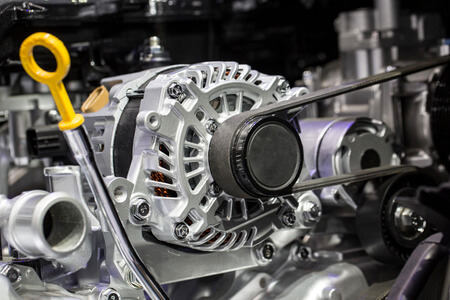
Locate the alternator under the hood and check to ensure the belt is connected and taut
A broken or slipping drive belt will cause a battery light on condition. Find the alternator and check for the presence of the alternator drive belt. The drive belt should be tightly wrapped around the alternator pulley. Press against a slack portion of the belt to check tension. The belt should not deflect more than ½”. If it does that would indicate a problem with the belt tensioner. A loose belt will slip on the alternator pulley and cause it not to generate power at full capacity.
Then, evaluate your options
If the cause of your battery light-on condition is related to a broken drive belt and you carry tools and a replacement alternator drive belt or fuses in your vehicle, you can attempt to fix the problem while on the side of the road. Your options are limited if you don’t carry tools or spare parts. You can try driving to the nearest shop or you can call roadside assistance to be towed to a shop. Here’s how to determine which option to choose.
1.) Opt for a tow if the drive belt that runs the alternator also drives the water pump. In many late model engines, a serpentine belt drives multiple components like the alternator, water pump, power steering pump, and AC compressor. If the serpentine belt or belt 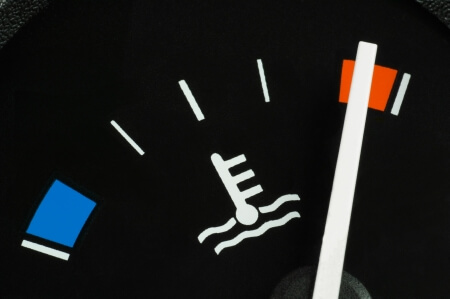 tensioner fails and you continue driving, the water pump won’t circulate coolant and the engine will overheat, causing extensive damage to your engine (like $1,500 to $3,000 worth of damage). In that case, it’s crazy to try and drive the vehicle to the nearest shop. Get it towed.
2) Drive to the nearest shop. Depending on how long the battery light was on before you pulled over, you may have enough power to run the fuel pump and ignition system long enough to get you to a shop. Before you do that, use your smartphone to calculate the distance and time required to get there because you may only have a maximum of 15 minutes remaining battery life. You may be better off staying in a safe spot and waiting for roadside assistance rather than having your vehicle die in heavy traffic on the way to a repair shop.
Whichever decision you make, keep an eye on your gauges, especially the engine temperature gauge. If the gauge rises as you drive, that’s an indication that the water pump isn’t operating proper OR there’s not enough power to operate the radiator fans at the proper speed. In that case, STOP driving and call for a tow. Don’t risk major engine damage due to engine overheating.
How to diagnose and fix a battery light on condition
I’ll assume you’ve towed the car to your home at this point, or you carry the proper tools in your car to conduct these tests on the side of the road. You’ll need a voltmeter to check battery condition and alternator performance. Start by checking the battery voltage with the engine off.
Test car battery condition
Set the voltmeter to DC volts (20 volts). Connect one meter 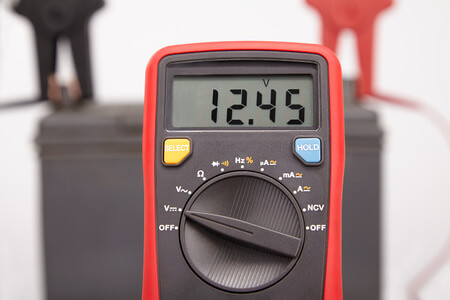 lead to the positive car battery terminal and the negative lead to the negative car battery terminal. Compare your voltage reading to the STATE OF CHARGE chart below:
Battery Voltage and State of Charge:
12.66v . . . . . . . . . . 100%
12.45v . . . . . . . . . . 75%
12.24v . . . . . . . . . . 50%
12.06v . . . . . . . . . . 25%
11.89v . . . . . . . . . . 0%
(NOTE: these readings are based on a battery temperature of 80 degrees F. However, battery voltage readings change with temperature. Adjust your results based on the battery temperature using this adjustment:
The battery voltage will drop roughly 0.01 volts for every 10 degrees F drop in temperature. Example: In cold weather, with the battery at 30 degrees F., your meter should read 12.588 volts if the battery is fully charged. At 0° F, a fully charged battery will read about 12.516 volts.
If your battery is below 12-volts, you must charge the battery with a battery charger before conducting any test on the alternator. Read this post to learn why.
Test alternator output
If the battery tests above 25 percent, test the alternator output. Turn off all electrical accessories and then start the engine. Check battery voltage with the engine running. You should see at least 13 volts. If the battery had a full charge, some late-model cars with power management systems won’t activate the alternator until the battery drain reaches a set voltage. If you see at least 13 volts, turn on the blower motor or rear window defogger and raise the engine RPM to around 2,000. Voltage should rise to at least 13.5-volts and remain steady for at least 5 minutes. That indicates a good alternator output.
If the voltage doesn’t rise to 13 volts that may indicate a bad alternator, bad alternator wiring connection or an issue with the voltage regulation circuit controlled by the PCM. Refer to a shop manual for instructions on how to test for voltage regulation.
WARNING: NEVER test the alternator by disconnecting the battery terminals from the battery while the engine is running. This test is obsolete, and if performed on a late-model vehicle equipped with computers, this test can cause the alternator to output up to 40 volts, destroying all electrical components in your vehicle. For more information on why this happens, see this post
©, Rick Muscoplat
Posted on by Rick Muscoplat