
When to Change Your Engine Air Filter: 7 Signs It’s Time
How to Tell If Your Engine Air Filter Is Dirty
Quick Summary
Don’t rely on mileage, filter color, or the old trick of holding the filter up to a light. I’ve spent enough time around engines to know that the condition of the filter—and the conditions the vehicle operates in—tell you far more than appearance alone.
Here are the key takeaways:
• Inspect the engine air filter regularly and follow your vehicle manufacturer’s maintenance schedule as your starting point.
• Driving conditions matter. Dusty roads, construction zones, dirt roads, and other contaminated environments can shorten filter life considerably.
• Look deep between the pleats. Significant debris packed into the bottom of the pleats is much more meaningful than surface discoloration.
• Replace a damaged filter immediately. A cracked or distorted sealing gasket can allow dirty, unfiltered air into the engine.
• Oil contamination deserves attention. An oil-soaked filter should be replaced, and the cause of the contamination should be investigated.
• Replace a collapsed or deformed filter. It may be severely restricted or unsuitable for the application.
• Don’t blast a disposable filter with compressed air. You risk damaging the filter media instead of restoring it.
• Mileage is a guideline, not a diagnosis. Your owner’s manual, operating environment, and actual filter condition should determine the final replacement interval.
The simple answer is this: Change your engine air filter when inspection shows that it is excessively loaded, contaminated, damaged, or deformed—or when your manufacturer specifies replacement.
Engine Air Filter Replacement Interval: What Really Affects It?
The useful life of an engine air filter can be affected by:
• Dusty or unpaved roads
• Construction-zone driving
• Off-road use
• Heavy airborne debris
• Agricultural environments
• Seasonal dust and pollen
• Vehicle design and air-intake location
• Filter construction and quality
• Total engine operating time
• Manufacturer specifications
This is why two identical vehicles with the same mileage can have engine air filters in completely different conditions.
When to change your car’s air filter
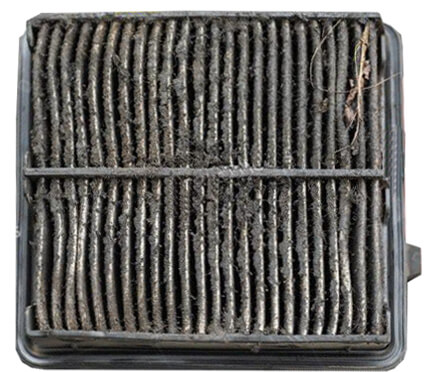
The pleats are packed with dirt, restricting airflow
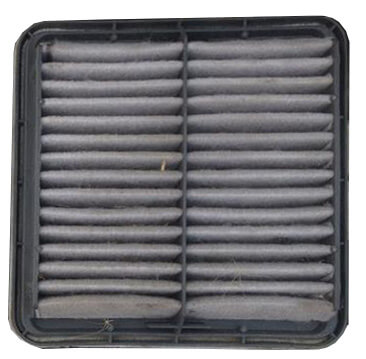
This filter has a light dusting of dirt, but there is little to no dirt in the pleats. This filter is still ok to use
1) Gently separate the pleats and look deep inside them. If you see debris packed into the bottom of the pleats, that filter is done. That dirt isn’t cosmetic—it’s restricting airflow.
Replace if you see a noticeable amount of debris stuck in the pleats
2) Oil staining is another red flag. Look for signs of oil contamination. They’ll be darker than the rest of the filter. Dark, oily patches indicate crankcase vapors are being pushed backward into the filter. If oil contamination covers more than about a 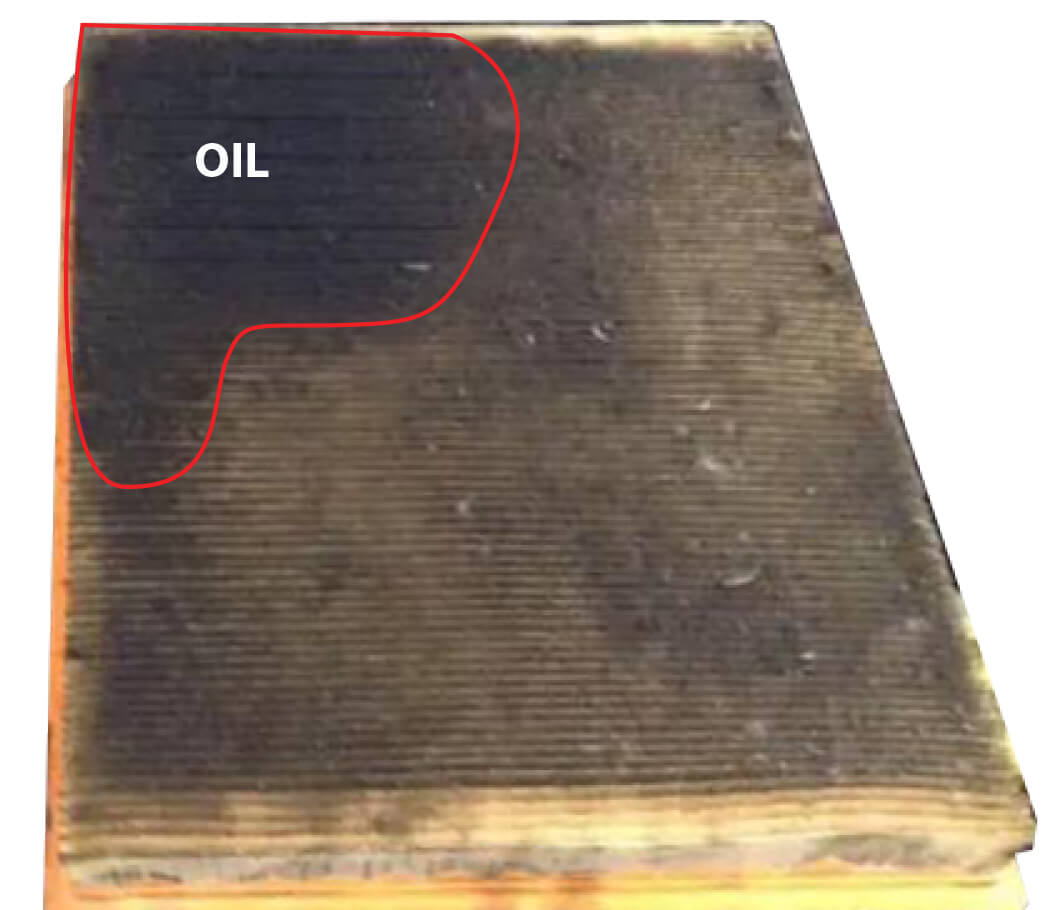 quarter of the filter area, airflow is compromised, and the engine air filter should be replaced immediately. This also tells me to look closer at the PCV system or engine wear.
3) Gasket/sealing edge damage— Most air filters have a foam or rubber gasket around the edges. If you see bits of the filter falling off or the rubber seal is deformed or cracked, replace it.The sealing edge matters just as much as the filter media. A damaged foam or rubber gasket allows unfiltered air to bypass the filter entirely. If the seal is cracked, deformed, or shedding material, that alone tells me when to change an engine air filter—right now.
4) Pleat Deformation—Finally, any filter that appears collapsed or “sucked in” is a problem. 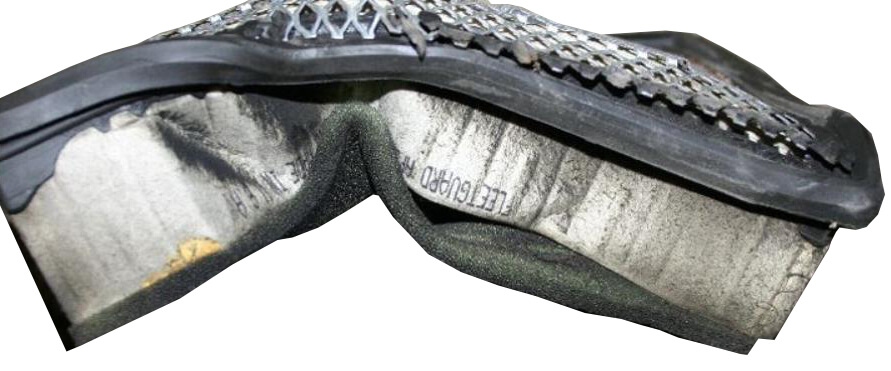 If it’s a new filter, the sucked-in condition means the filter is the wrong size for the filter box, is overly restrictive, or is completely clogged and can’t pass enough air to meet engine requirements. Replace any filter that’s deformed or ‘sucked in.’
Debunking The Two Most Common Visual Car Air Filter Tests
1) Holding a light behind the filter— The theory is that if you can see less than 50% of the light, the filter is bad. This test has been fully debunked by laboratory testing. The filter that appeared to obscure light tested fine with flow measurements. In other words, the light test isn’t accurate.
2) Checking for discoloration on the tops of the pleats— This visual test has also been proven inaccurate. The top portion of the pleats often discolors quickly, yet the filter often has lots of useful life left.
How a Modern Engine Air Filter Really Works
A modern engine air filter isn’t just folded paper. It’s a carefully engineered component designed to trap dirt while still flowing enough air to keep your engine happy. Most quality filters use a two-layer design, with each layer performing a specific function.
The Fluff Layer – Your First Line of Defense
This is the uppermost layer, and its job is to catch the larger particles before they go any further. This process is called impingement, in which airborne particles slam into and stick to the fibers, much like dust clinging to your walls. The science behind this is adsorption, not absorption. The dirt clings to the outer surface rather than soaking in.
The Screen Layer – Where the Real Work Happens
Below the fluff is the screen layer: a tightly woven mat of synthetic fibers designed to stop the tiniest, most damaging particles. Here’s the kicker: as this layer fills with dirt, the filter actually becomes more efficient. Why? Because the larger holes in the mesh begin to plug up, forcing air to pass through the smaller pores. That’s when the filter truly starts capturing the smallest contaminants.
A well-designed engine air filter tightly holds onto those microscopic particles. Once they’re in, they’re not going anywhere. And that’s exactly the problem when people try to clean them. Attempting to “clean” a filter almost always does more harm than good, and knowing when to change an engine air filter is critical.
The Two Fastest Ways to Ruin an Engine Air Filter
Blowing It Out From Behind With Compressed Air— Don’t do this—ever. You may think you’re extending the life of your air filter by blowing dirt out of it with compressed air. But what you’re really doing is damaging the filter. The air pressure doesn’t just blow the dirt out; it actually enlarges the pores in the filter’s screen layer. From that point on, the filter will let in more dirt, leading to increased engine wear. Yes, it removes the trapped dirt, but the damage to the screen layer’s pores pretty much turns it into a spaghetti strainer. It’s the single best way to damage your car’s air filter, rendering it useless.
Smacking it on the ground, filter side down: Yes, some untapped dirt may fall from the fluff layer. That’ll make you feel good. However, it won’t dislodge the trapped dirt from the screen layer, as a high-quality air filter traps it and prevents it from escaping. It’s a complete waste of time and doesn’t clean your filter.
Why Getting This Right Actually Matters
Your engine air filter is the only thing standing between airborne grit and precision-machined engine components. Replacing it too late increases engine wear. Replacing it too early wastes money—but far less than rebuilding an engine.
If you understand how the filter works, inspect it properly, and make informed decisions about when to change an engine air filter, you’ll protect performance, efficiency, and engine longevity all at once.
© 2023 Rick Muscoplat