
Why Spark Plugs Fail and How to Avoid It
Spark Plug Failure: What Causes Spark Plugs to Fail and How to Prevent It
Quick Summary
Spark plugs are one of the hardest-working components in your engine. They must ignite the air-fuel mixture thousands of times per minute while enduring temperatures that can exceed 4,500°F inside the combustion chamber. When a spark plug fails, the result can be engine misfires, rough idle, poor fuel economy, hard starting, and even damage to the catalytic converter.
As an ASE Master Technician, I’ve found that most spark plug failures aren’t caused by defective plugs. In fact, they’re usually caused by installation mistakes, incorrect spark plug selection, engine problems, or neglect.
Key Takeaways
• Improper installation torque is the leading cause of premature spark plug failure.
• Using the wrong spark plug type, heat range, or electrode material can dramatically shorten spark plug life.
• An incorrect spark plug gap stresses the ignition system and causes misfires.
• Oil contamination, carbon fouling, and engine problems often damage spark plugs.
Understanding what causes spark plugs to fail can help prevent expensive engine repairs.
What Is Spark Plug Failure?
A spark plug’s job is simple but critical: create a high-voltage spark that ignites the compressed air-fuel mixture inside the combustion chamber.
When a spark plug can no longer produce a reliable spark, it has failed.
The failure may occur because of:
• Electrode wear
• Carbon fouling
• Oil contamination
• Physical damage
• Incorrect installation
• Excessive heat
• Ignition system problems
The challenge is that spark plugs often fail gradually, causing symptoms that worsen over time.
What Causes Spark Plugs to Fail?
After decades of diagnosing ignition system problems, I’ve found that spark plug failure usually falls into a handful of common categories.
1. Improper Torque Is the Number One Cause of Spark Plug Failure — Many DIYers are surprised to learn that improper installation torque is the leading cause of premature spark plug failure. According to NGK, more than 90% of early spark plug failures can be traced to improper installation torque.
Over-Tightening — When a spark plug is overtightened:
• The metal shell can distort.
• The porcelain insulator can crack.
• The shell-to-insulator gas seal can fail.
• Misfires can develop.
Sometimes the damage is invisible to the naked eye but still causes performance problems.
2. Under-Tightening — A loose spark plug creates a different set of problems:
• Combustion gases leak past the seat.
• Heat transfer is reduced.
• The plug overheats.
• Pre-ignition and detonation may occur.
• Threads can become damaged.
In extreme cases, the spark plug can literally blow out of the cylinder head.
3. Using the Wrong Spark Plug Type — Modern engines are engineered around specific spark plug designs.
Manufacturers carefully select:
• Electrode material
• Heat range
• Gap specification
• Reach length
Replacing an iridium plug with a cheaper copper plug may save money today, but it often leads to shorter service life and reduced performance.
Common electrode materials include:
Copper core with a nickel-plated center electrode
• Lowest cost
• Shortest lifespan
Platinum
• Longer life
• Better durability
Double Platinum
• Designed for waste-spark ignition systems
Iridium
• Longest service life
• Superior wear resistance
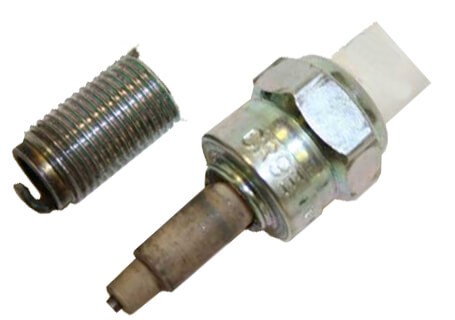
Broken spark plug due to excessive torque
3. Incorrect Spark Plug Gap — One of the most overlooked causes of spark plug failure is an incorrect gap.
Even if a plug comes “pre-gapped,” I always recommend checking it before installation. A gap that’s too wide forces the ignition coil to generate higher voltage.
This can lead to:
• Coil failure
• Plug wire damage
• Misfires
• Hard starting
A gap that’s too narrow may reduce combustion efficiency and engine performance.
4. Using the Wrong Heat Range — Heat range refers to a spark plug’s ability to transfer heat away from the combustion chamber.
Too Hot — A spark plug that’s too hot may cause:
• Pre-ignition
• Detonation
• Electrode damage
• Melted ground straps
Too Cold — A spark plug that’s too cold may cause:
• Carbon fouling
• Misfires
• Rough idle
• Poor fuel economy
Always use the manufacturer’s recommended heat range unless a specific engine modification requires otherwise.
5. Carbon Fouling — Carbon fouling is among the most common spark plug problems I encounter. A carbon-fouled spark plug develops dry black deposits on the insulator tip.
Common causes include:
• Rich air-fuel mixture
• Excessive idling
• Faulty fuel injectors
• Dirty air filters
• Frequent short trips
As deposits build, they create an electrical path that weakens the spark.
6. Oil Fouling — Oil contamination can quickly destroy a spark plug. Oil-fouled spark plugs typically appear wet and black.
Common causes include:
• Worn piston rings
• Valve guide wear
• Failed valve stem seals
• Leaking turbocharger seals
• Valve cover gasket leaks
Oil deposits interfere with spark formation and often trigger cylinder misfires.
7. Engine Overheating and Detonation — Spark plugs are designed to operate within a specific temperature range. Excessive combustion temperatures can damage:
• Electrodes
• Porcelain insulators
• The side electrode
Potential causes include:
• Lean fuel mixture
• Cooling system problems
• Vacuum leaks
• Incorrect ignition timing
• Low-octane fuel
A melted electrode is often a sign of severe overheating or detonation.
8. Physical Damage During Installation — I’ve seen countless new spark plugs damaged before they were ever installed.
Common mistakes include:
• Dropping the plug
• Using improper gapping tools
• Cross-threading
• Damaging the porcelain insulator
Even a hairline crack can cause intermittent misfires.
9. Anti-Seize Misuse — Many technicians still apply anti-seize to spark plug threads out of habit. However, most modern spark plugs already have factory-applied anti-seize coatings.
Adding additional anti-seize can:
• Alter torque readings
• Cause over-tightening
• Damage threads
• Shorten plug life
Always follow the plug manufacturer’s recommendations.
Don’t use anti-seize on new spark plugs
Yes, I realize you’ve been taught to use it. But that advice is OBSOLETE. Read this post about the change in spark plug installation techniques. Most new spark plug threads are
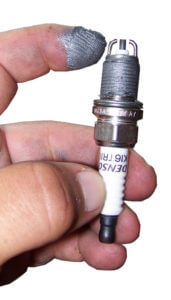
Most spark plugs don’t require anti-seize
treated with a metallic zinc or nickel anti-seize coating AT THE FACTORY. The coating prevents thread galling during installation and prevents seizing in the cylinder head. Adding anti-seize only throws off your torque calculations, causing you to over-torque.
Tightening a spark plug by hand without a torque wrench is just plain crazy
If you under-tighten a spark plug, it won’t seat properly, causing combustion gases to leak out. It also won’t make full contact with the cylinder head, so it can’t dissipate heat properly. That results in pre-ignition, detonation, and possible engine damage. Under-tightening can also cause the spark plug to eventually blow right out of the cylinder head, taking the cylinder head threads with it. In addition to breaking the shell-to-porcelain seal, overtightening can distort the cylinder head threads or even rip them out.
What’s the proper spark plug torque specification?
The proper torque depends on the type of spark plug seat (tapered or washer), the cylinder head material, and the spark plug thread diameter. Refer to the shop manual or the spark plug manufacturer’s website for the proper torque.
Spark Plug Failure Symptoms
When spark plugs begin to fail, the symptoms often appear gradually. Common signs include:
Engine Misfire — The most common symptom of spark plug failure is an engine misfire.
• Hesitation
• Jerking
• Rough acceleration
• Check Engine Light illumination
• Rough Idle
The engine may shake or vibrate while stopped.
Hard Starting — Worn spark plugs often struggle to ignite the richer air-fuel mixture required during cold starts.
Poor Fuel Economy — Incomplete combustion forces the engine to consume more fuel.
Increased Emissions — A failing spark plug reduces combustion efficiency and increases exhaust emissions.
Check Engine Light — Many modern vehicles will store codes such as:
• P0300
• P0301
• P0302
• P0303
• P0304
These indicate random or cylinder-specific misfires.
How Long Should Spark Plugs Last?
Typical service life varies by plug design:
Type Expected Life
• Copper 20,000–30,000 miles
• Platinum 60,000–100,000 miles
• Double Platinum 80,000–100,000 miles
• Iridium 100,000–120,000+ miles
However, spark plug life is also related to engine type. For example, an iridium spark plug in a traditional engine can last up to 120K miles, but only 60K miles when installed in a “lean-burn” engine. Always follow the car manufacturer’s maintenance schedule for spark plug replacement.
How to Prevent Spark Plug Failure
The best way to avoid spark plug failure is through preventive maintenance.
I recommend:
• Using OEM-recommended spark plugs
• Verifying spark plug gap
• Using a torque wrench
• Repairing oil leaks promptly
• Fixing engine misfires immediately
• Replacing ignition coils when necessary
• Following factory replacement intervals
Final Thoughts
When drivers ask me what causes spark plugs to fail, they’re often expecting a simple answer. In reality, spark plug failure is usually the result of installation errors, incorrect plug selection, engine problems, or normal wear.
The good news is that most spark plug failures are preventable. By installing the correct spark plugs, using proper torque, maintaining the ignition system, and addressing engine issues early, you can maximize spark plug life and keep your engine running efficiently for years.
©, 2017 Rick Muscoplat