
Why you should never use belt dressing
Why Belt Dressing Damages EPDM Serpentine Belts
Vehicles made since the early 2000s are built using advanced EPDM (ethylene propylene diene monomer) serpentine belts that are far more durable and efficient than the old neoprene belts of decades past. However, many drivers still reach for an outdated solution when they hear belt squeal—products marketed as belt dressing. While these sprays and liquids were once a quick fix for minor belt issues, today they do far more harm than good. If you’re dealing with serpentine belt noise, belt dressing will not only fail to solve the problem but can actually make it worse.
What Is Belt Dressing and Why Was It Used?
Belt dressing is a tacky, petroleum-based chemical spray designed to restore grip on older neoprene V-belts temporarily. Back in the day, mechanics and DIYers used it to reduce belt squeal caused by slipping. By making the belt stickier, belt dressing helped restore traction between the belt and pulley, at least for a short time.
What’s in it?
Belt dressing, also mistakenly called “belt conditioner,” is really just a sticky spray to increase the grip between the belt and the pulleys. The spray has some temporary lubricating properties, but they don’t last long, and the belt noise always returns. Here’s what’s in belt dressing:
• Hydrocarbon Polymer — A tacky substance
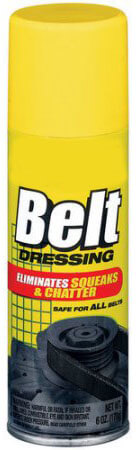
NEVER apply ANY kind of lubricant or belt dressing to an automotive belt. It NEVER fixes the underlying problem and just damages the belt and pulleys
similar to an adhesive that adds stickiness and helps seal the belt surface to reduce friction noise.
• Non-Chlorinated Hydrocarbon Solvent — The solvent serves two purposes: 1) it’s the carrier for the tacky adhesive, and 2) it cleans the belt and pulley.
• A Petroleum-Based Oil or Synthetic Polymer — This is the “conditioning” part of the formula. It reduces friction between the belt and pulleys to reduce noise. Unfortunately, reducing friction is not a good thing when you’re using the belt to rotate essential components. It’s why belt dressing works for a while, and then the belt starts slipping and making noise again.
Why Belt Dressing Causes More Harm Than Good
1. It Softens and Damages EPDM Belts— EPDM is highly resistant to heat and wear, but the petroleum-based solvents in belt dressing attack the rubber compound. Instead of curing belt squeal, they soften the surface and reduce grip. Over time, this accelerates wear and can lead to premature belt failure.
2. It Makes Serpentine Belt Noise Worse— Ironically, the very problem you’re trying to fix—serpentine belt noise—becomes worse with belt dressing. The chemicals create a sticky surface that collects dirt and grit. That abrasive layer acts like sandpaper on the pulleys, making the belt squeal louder and shortening the life of both the belt and pulleys.
3. It Masks the Real Problem— Belt squeal isn’t caused by a “dry” belt. It’s caused by one of three root issues:
• A worn belt with rib material that has lost its shape
• A failing tensioner that no longer keeps proper tension
• Misaligned pulleys that cause the belt to ride incorrectly
Spraying belt dressing temporarily hides the noise, while the actual issue worsens. That’s why every major belt manufacturer and OEM warns against using it on modern vehicles.
Belt Dressing Can Damage Pulleys
Because belt dressing contains a tacky adhesive, it tends to pick up and retain dirt and grit, which it then grinds into your belt and pulleys, wearing them both out prematurely. It’s really no different than spraying your bicycle tires with adhesive and then being amazed that they pick up all the sand and dirt you drive through.
Why Belt Manufacturers Say “No” to Belt Dressing
Every major belt maker, including Gates, Dayco, and Continental, explicitly warns against using belt dressing on EPDM belts. Automakers also note that applying foreign chemicals to the belt or pulley system can void warranties. Simply put, if you spray belt dressing on your belt, you’re not only risking damage—you’re ignoring professional advice from the very companies that engineered the parts.
The Right Way to Solve Serpentine Belt Noise
If you’re dealing with belt squeal, the solution is simple: diagnose and repair the root cause. Here’s what an experienced technician would recommend:
Inspect Belt Wear: EPDM belts don’t crack like older neoprene versions. Instead, they wear down in the ribs, losing the sharp “V” profile needed to grip pulleys. Use a belt wear gauge or replace the belt if it shows rib flattening or glazing.
Check the Tensioner: A weak or seized tensioner spring can’t maintain proper tension, allowing the belt to slip. If you notice excessive belt movement or hear chirping noises, replace the tensioner assembly.
Verify Pulley Alignment: Even a small misalignment can cause serpentine belt noise. Check each pulley with a straightedge or alignment tool and correct any deviations.
Replace Worn Pulleys: Idler and accessory pulleys with worn bearings or grooves contribute to belt squeal. Spinning each pulley by hand during inspection can reveal roughness or play that requires replacement.
By addressing these issues, you’ll fix serpentine belt noise the right way—without relying on a chemical quick fix that damages modern belts.
Don’t Spray—Replace and Repair
If you’re tempted to reach for a can of belt dressing the next time you hear belt squeal, remember this: you’ll only be wasting money and making serpentine belt noise worse. Modern EPDM belts require mechanical solutions, not chemical sprays. The real fix is proper inspection, alignment, and replacement when necessary.
As an automotive expert, I can tell you with certainty: belt dressing is obsolete. On modern cars, the only cure for serpentine belt noise is diagnosing the root cause and repairing it properly.
Don’t use belt dressing. Find the real cause of belt squeal and chirp
So what’s the real fix? Belts squeal and chirp because:
1) the belt is worn or glazed
2) the belt is too loose or too tight. If you have an automatic tensioner, the only fix is to replace the tensioner.
3) an idler pulley is presenting resistance and not turning as fast as the belt
4) One of the drive units is out of alignment
Locate the belt noise
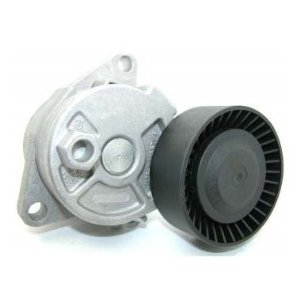
Automatic Belt Tensioner
© 2012 Rick Muscoplat
Posted on by Rick Muscoplat