
Worn Serpentine Belt Symptoms
Why You Can’t Judge Belt Condition by Cracks Anymore
As an automotive expert, I can’t overstate the importance of knowing how to spot the signs of a worn serpentine belt. This single belt powers critical components like your alternator, water pump, power steering pump, and A/C compressor. If you ignore the symptoms of a bad serpentine belt, you’re setting yourself up for breakdowns, overheating, or even a sudden loss of power steering assist. Let me walk you through exactly how I determine when it’s time to change a serpentine belt and the most common symptoms that signal trouble.
Why the Old Rules Don’t Apply Anymore
Back in the day, serpentine belts were made from neoprene. Those belts typically lasted about 30,000 miles before they cracked and needed replacement. Cracks were the leading indicator of a bad serpentine belt so that you could spot problems visually.
Since the mid-1990s, though, automakers have switched to EPDM (ethylene propylene diene monomer) rubber. An EPDM belt can last 100,000 miles or more, but it doesn’t fail the way older belts did. EPDM doesn’t crack. That means you can’t just “eyeball it” anymore. A belt can look fine to the naked eye, but still be a badly worn serpentine belt that’s slipping and overheating.
EPDM Belt Life
EPDM belts are designed to last about 100,000 miles. If you’re close to that mileage or over that mileage, it’s time to change the belt regardless of how it’s working.
How I Check For Serpentiner Belt Wear
Over time and use, the ribs of a serpentine belt wear down, causing the belt to lose grip on the pulleys. When new, each rib is designed to wedge firmly into the grooves of the pulley. As those ribs wear away, the belt rides lower in the groove, causing the high points of the pulley to contact the belt backing, causing slip. The automatic belt tensioner tries to compensate by tightening the belt, but there’s simply not enough grip left. The result? A noisy, slipping, bad serpentine belt that can’t reliably drive accessories.
That’s why I never rely solely on looks. Instead, I examine the profile of the ribs or use a serpentine belt wear gauge. These gauges, available from Gates and Dayco, measure how much rib material has been lost. There are even smartphone apps that analyze a photo of your belt to determine wear. When the gauge shows the ribs have worn beyond tolerance, it’s time to replace the belt—no matter how “good” it looks.
To learn how to check an automatic belt tensioner, see this post
Check belt wear with a gauge
This illustration shows how rib wear can cause the belt to  lose gripping power. The belt’s only contact with the pulley is at the bottom of the rib valley. It simply loses its ability to wedge into the pulley “V”. So the belt slips, chirps, squeals, and the driven component loses efficiency.
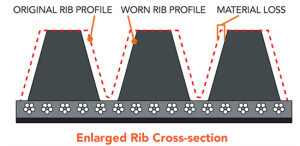
This illustration shows how rib wear can cause the belt to lose gripping power. The belt’s only contact with the pulley is at the bottom of the rib valley. It simply loses its ability to wedge into the pulley “V”. So the belt slips, chirps, squeals and the driven component loses efficiency.
The serpentine belt wear gauge measures how much rib material has worn away. Gates and Dayco offer belt gauges. Or, you can download a Gates app for your smartphone. To use it, take a picture of the belt and the app can measure belt wear for you.
When the gauge shows the belt wear exceeds tolerances, replace the belt.
Pay attention to the symptoms of a worn serpentine belt
• Squealing or Chirping Noises— One of the most common signs of a worn serpentine belt is a squealing or chirping noise coming from the engine compartment. This noise occurs because the belt is slipping on the pulleys.
• Fraying or loose fibers— Unlike old neoprene belts that cracked, EPDM belts sometimes fray. If you see threads or cords peeling from the edges, you’re looking at a bad serpentine belt that’s well past its prime.
• Pulley Marks on the Backside – When the ribs wear flat, the pulley grooves dig into the backing of the belt. You’ll see distinct track marks, which mean the belt is slipping and losing efficiency.
• Engine Overheating (Rare) – In some vehicles, the serpentine belt drives the water pump. A badly worn serpentine belt could theoretically slip enough to reduce coolant flow. It’s rare, but I’ve seen it happen. Usually, you’ll hear squealing long before overheating sets in.
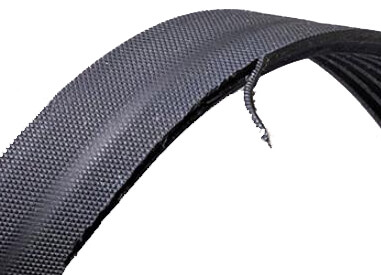
Serpentine belt fray

Notice the tracking marks on the backside of the belt that corresponds to the high spots on the grooved pulley

Notice the wear on the backside. This can cause squealing and slipping
• Degradation on the backside of the belt— Since a serpentine belt drives components from both sides of the belt, the backside can also show signs of wear. This image shows serious rubber wear and degradation, a sign that it should be replaced.
• Glazing on the Belt— Glazing occurs when the belt’s surface becomes smooth and shiny. This can result from excessive heat or friction and indicates that the belt is not gripping the pulleys properly, leading to slippage.
Mileage Still Matters
Even if you don’t hear noises or see obvious wear, mileage is a key factor. An EPDM serpentine belt is designed to last about 100,000 miles. If your vehicle has reached or passed that threshold, I recommend replacing the belt regardless of visible condition. At that age, you’re almost guaranteed to be driving with a worn serpentine belt.
©, 2019 Rick Muscoplat
Posted on by Rick Muscoplat