
Brake Rotor Warp Myth: What Causes Brake Pedal Pulsation
Brake Rotor Warp Is a Myth: What Really Causes Brake Pedal Pulsation and Brake Judder
Quick Summary
Most drivers — and even many technicians — still believe that brake rotor warp is what causes brake pedal pulsation and brake judder. After decades of brake work and advanced diagnostics, I can tell you that’s usually wrong. In almost every street vehicle I’ve diagnosed, the real problem wasn’t a physically warped rotor at all. The real culprit was disc thickness variation (DTV) caused by rotor lateral runout, uneven pad deposits, improper lug nut torque, hub corrosion, or worn wheel bearings.
Here’s the truth:
• Street vehicle brakes generally cannot generate enough heat to permanently warp a cast-iron brake rotor
• Brake pedal pulsation is almost always caused by a thickness variation across the rotor surface
• Lateral runout creates uneven brake pad contact, which causes pad deposits or uneven rotor wear
• Uneven lug nut torque and rusty wheel hubs are among the biggest causes of brake judder
• “Warped rotors” are usually a brake installation or maintenance problem, not an overheating problem
I’ve spent years correcting this misconception because understanding the true cause of brake rotor warp complaints helps you fix the problem permanently, rather than replacing rotors over and over again.
For more detail on what causes brake pedal pulsation read Understanding disc thickness variation and why it’s confused with rotor warp
The Biggest Myth in the Brake Industry: Brake Rotor Warp
I can’t count how many times I’ve heard someone say, “My rotors warped.” In fact, brake rotor warp has become one of the most misunderstood terms in automotive repair. Here’s the reality: on normal street vehicles, true brake rotor warp almost never happens.
When drivers feel brake pedal pulsation, steering wheel shake during braking, or brake judder, they automatically assume the rotor is physically bent from heat. But cast-iron brake rotors are incredibly stable. It takes temperatures far beyond those a typical passenger vehicle can reach to permanently deform one.
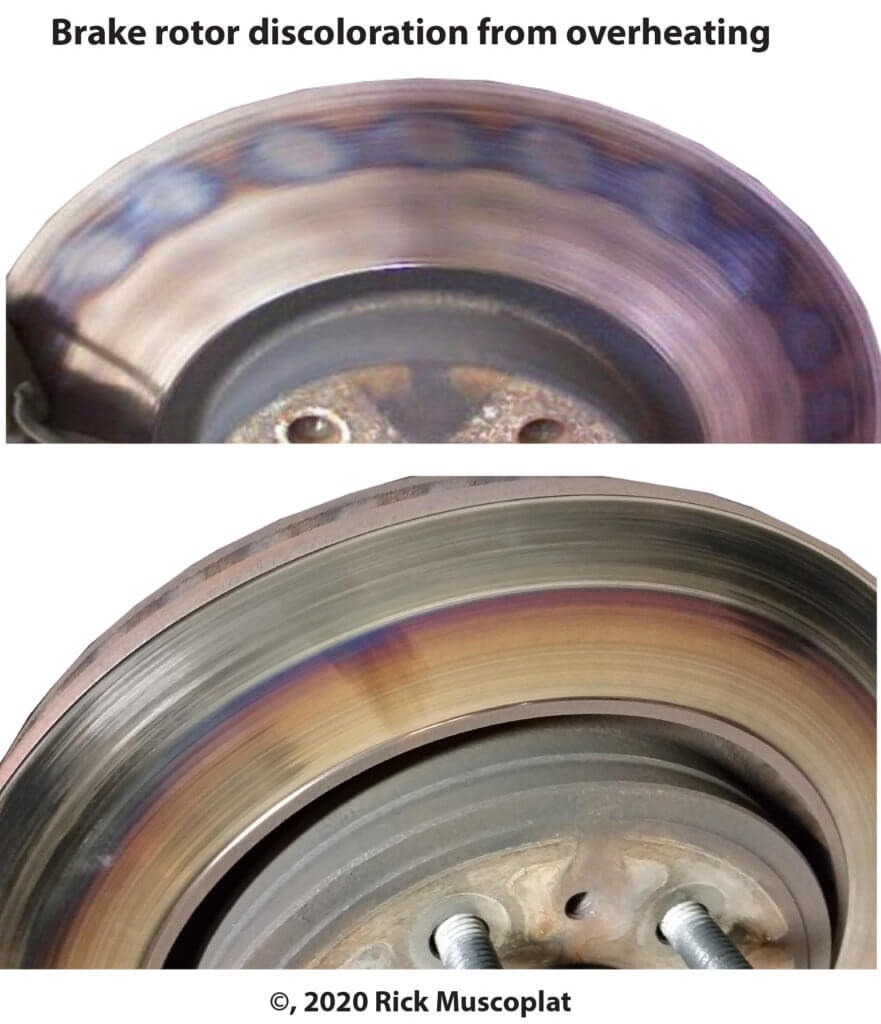
Most street brake systems operate in the 300°F to 500°F range during aggressive braking. Yet permanent rotor deformation requires temperatures approaching 1,800°F or more. By the time you ever reached those temperatures, the brake pads would already be destroyed, the rotor would be glowing red, and you’d see severe blue discoloration everywhere.
That’s why I always tell people this: If your brake pads survived, your rotors probably didn’t warp.
BRAKE TEMPERATURE FACTS
Brake pads simply can’t generate the heat needed to warp a brake rotor.
At 550°F – 650°F— The organic binding resins in the friction material begin to melt and smear, creating a lubrication effect that reduces braking. The melted resin is what causes a “glazed” pad. At higher temperatures, the melting resins and the metallic elements begin to vaporize, resulting in “off-gassing. ” Off-gassing also acts as a lubricant, causing brake fade or loss of braking power. You can smell the melting brake pad resin odor in this temperature range.
At 850°F— Brake pads begin to smoke. Again, 850°F is not hot enough to warp a rotor.
At 1,100°F, the brake pad friction, the material begins to oxidize (burn up). The rotors react with moisture and oxygen in the air to form iron oxide, causing blue spots on the rotor.
At 1,250°F—Brake rotors turn cherry red.
At 1,400°F, you’re finally reaching the point where the rotor overheats and softens.
In other words, long before your vehicle has reached the temperature needed to warp a rotor, your pads would be burned up, and your rotors would have blue marks on them.
To warp a rotor, you have to change its metallurgy, and that requires temperatures of almost 2,000°F. There’s no street vehicle braking system that can generate that kind of heat

Whitepaper by Carroll Centric Smith, Consulting Engineer at StopTech Brakes, dispelling the myth that brake rotors warp from heat. Click on the image to download the entire PDF
What Actually Causes Brake Pedal Pulsation?
The real cause of brake pedal pulsation is usually disc thickness variation (DTV).
That means the rotor develops slightly thicker and thinner areas around its circumference. As the brake caliper squeezes the rotor, the hydraulic pressure fluctuates each time a thicker section of the rotor passes through the pads. That hydraulic fluctuation travels back through the brake fluid and into the brake pedal.
That’s the pulsation you feel.
This also creates brake judder, where the steering wheel shakes or the vehicle vibrates during braking.
In other words, the rotor isn’t bent like a potato chip. Instead, it has microscopic thickness differences around the braking surface.
And those tiny differences are enough to create major brake complaints.
How Lateral Runout Creates Disc Thickness Variation
This is where the real engineering explanation begins.
For a brake rotor to operate correctly, it must sit perfectly parallel to the wheel hub and brake caliper. If it doesn’t, the rotor wobbles slightly side to side as it rotates. That wobble is called lateral runout. Even a tiny amount of lateral runout can create brake pedal pulsation.
As the rotor rotates:
• One side of the rotor contacts the inboard brake pad harder
• The opposite side barely touches the outboard pad
• Half a rotation later, the opposite occurs
That uneven contact creates:
• Uneven brake pad deposits
• Uneven rotor wear
• Disc thickness variation
• Brake judder
• Brake pedal pulsation
I’ve seen brake pedal pulsation develop with as little as .002″–.00
Why Heat Does NOT Cause Brake Rotor Warp
This is where a lot of misinformation still exists online. People assume repeated hard braking overheats the rotor and permanently bends it. But that theory ignores metallurgy and thermal behavior.
Cast iron expands when heated. When it cools, it contracts back to its original shape unless the metal structure itself changes.
To permanently deform a brake rotor, you must soften the cast iron itself. That requires temperatures near the material’s critical metallurgical threshold.
Typical gray cast iron brake rotors melt around:
2,093°F for G3000 cast iron
2,093°F for G4000 cast iron
Permanent rotor deformation requires temperatures approaching 1,800°F or more. Street brakes simply do not operate there.
Before your brake temperatures ever reached that 1,800° temperature, your:
• Brake pads would burn up
• Organic binders would vaporize
• Severe brake fade would occur
• The rotor would glow cherry red
• Blue heat spots would appear everywhere
In real-world street driving, that almost never happens.
What About Driving Through Water After Heavy Braking?
Another popular brake rotor warp myth involves puddles.
The theory says:
“You drove through water after braking hard, and the rotor warped.”
That’s not what actually happens. Rapid cooling of extremely hot cast iron causes stress fractures and cracking, not permanent warping.
Think about pouring cold water into a hot glass baking dish. It cracks from thermal shock.
Brake rotors behave similarly.
If thermal shock damage occurs, you’ll usually see:
• Rotor cracking
• Severe heat discoloration
• Destroyed brake pads
• Surface checking
But not the classic “warped rotor” people imagine.
The Most Common Causes of Brake Judder and Brake Pedal Pulsation
Over the years, I’ve found these are the most common causes of brake judder complaints:
1) Rust on the Wheel Hubs — Hub corrosion prevents the rotor from mounting perfectly flat.
Even tiny rust flakes can create rotor lateral runout. That’s why I always clean the hub surface with an abrasive disc before installing new rotors.
2) Uneven Lug Nut Torque — This is huge. Improper lug nut torque can distort rotor mounting alignment and create lateral runout immediately after installation. I never use an impact gun for final tightening. Always use a calibrated torque wrench in the correct star pattern.
4) Cheap Brake Pads — Some friction materials transfer pad deposits unevenly, especially when overheated. Those uneven deposits create disc thickness variation that mimics brake rotor warp.
5) Worn Wheel Bearings — A loose wheel bearing allows the hub and rotor to wobble relative to the brake caliper. That movement creates uneven pad contact and repeated brake pedal pulsation.
Why Machining or Replacing Rotors Sometimes “Fixes” the Problem
This confuses many people.
If brake rotor warp isn’t real, why does replacing rotors fix brake judder?
Simple.
Replacing or resurfacing the rotor temporarily removes the disc thickness variation. But if you don’t correct the root cause — hub corrosion, improper torque, or bearing wear — the brake pedal pulsation eventually returns.
That’s why some drivers experience repeat brake judder only a few thousand miles after a brake job.
The installation problem never got fixed.
How I Prevent Brake Pedal Pulsation
Whenever I install brake rotors, I follow a strict process:
• Clean the wheel hub completely
• Measure hub runout with a dial indicator
• Check wheel bearing play
• Use proper lug nut torque procedures
• Match quality pads to the rotor material
• Perform proper pad bedding procedures
That dramatically reduces complaints about repeat brake rotor warping.
Final Thoughts on Brake Rotor Warp
The term brake rotor warp has survived for decades because it’s simple and easy to understand. But technically, it’s usually incorrect.
What drivers actually feel as brake pedal pulsation and brake judder is almost always disc thickness variation caused by rotor lateral runout, uneven pad deposits, hub corrosion, or installation problems.
Understanding the difference matters because it changes how you diagnose and repair the problem.
If you only replace the rotors without addressing the underlying cause, the pulsation will almost always return.
Once you understand how brake systems really work, the entire “warped rotor” myth starts to fall apart.
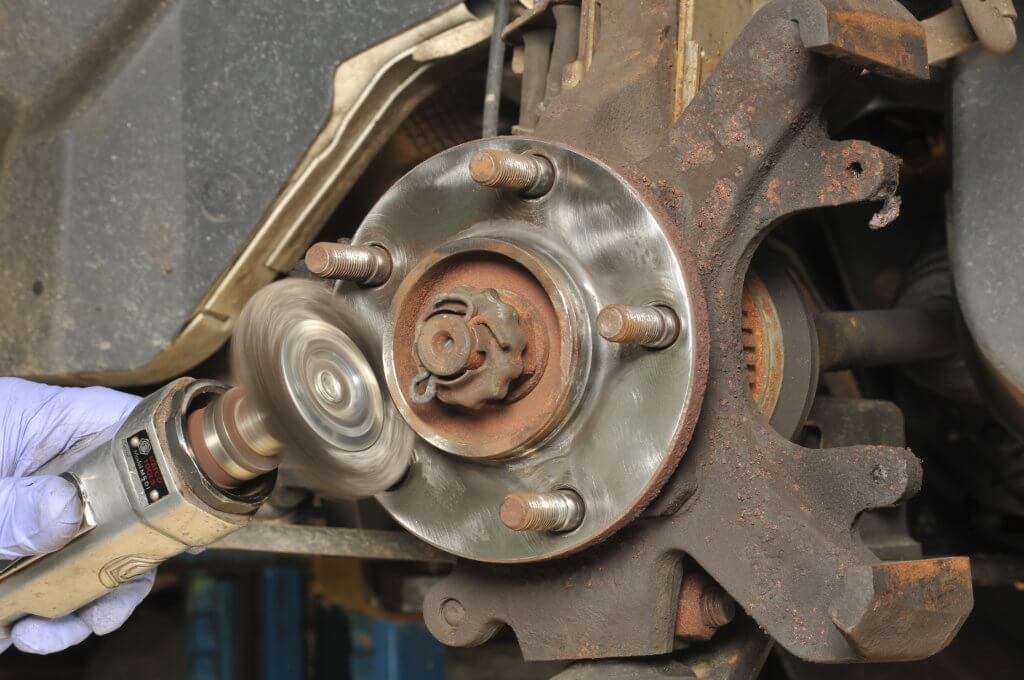
Cleaning the wheel hub to remove corrosion ensures a parallel fit between the rotor and the hub.
will either wear opposite sides of the rotor (if you use abrasive friction material) or have pad deposits on opposite sides of the rotor (if you use adherent brake pads).
©, 2021 Rick Muscoplat
Posted on by Rick Muscoplat