
Car Won’t Start? How to Diagnose the Real Problem
Why Your Car Struggles to Start and What to Check First
Quick Summary
When your car won’t start but cranks at normal speed, the battery is not the problem. In almost every case I’ve diagnosed, the issue comes down to fuel, air, or spark. If your car struggles to start, the sound it makes while cranking tells you where to look first. Learn to read those clues, and you can diagnose most no-start and hard-start problems without guessing or throwing parts at the car.
Article
Car Won’t Start? How I Diagnose Hard-Start Problems Step by Step
Before I ever grab a scan tool, I listen. Over decades of diagnosing no-start complaints, I’ve learned that the way an engine cranks tells you more than most warning lights ever will. When a car won’t start, the first question I ask is whether the engine is cranking at normal speed. If it is, the battery and starter are doing their jobs—and we can stop wasting time there.
When people tell me their car struggles to start, they’re usually describing one of two sounds: either the engine cranks normally but never fires, or it cranks for a long time before finally stumbling to life. Each sound point to a different diagnostic path.
Cranks Normally but the Car Won’t Start at All
When an engine cranks at normal speed and never fires, that tells me the battery is strong, and the starter is healthy. At that point, a car won’t start because it’s missing one of two things: fuel or spark.
Engines don’t need much to run, but they absolutely need both. The trick is figuring out which one is missing—and that’s where sound, smell, and simple tests come into play.
Cranks a Long Time and the Car Struggles to Start
This is the more common complaint I hear. The engine cranks, sputters, maybe catches for a second, and then finally starts after several seconds. When a car struggles to start like this, I’m almost always looking at an air-fuel delivery issue rather than an ignition issue.
The ignition system is clearly working because the engine eventually fires. The delay usually means the engine isn’t getting the right amount of fuel or air at the right time.
Your car struggles to start due to air/fuel-related issues — The most common causes
1) Bad fuel pump
2) Bad fuel pressure regulator
3) Clogged or leaking fuel injectors
4) Clogged, dirty, or faulty Mass Airflow Sensor
5) Bad engine coolant or air temperature sensor
6) Crankshaft sensor
Fuel Pressure Problems That Make a Car Struggle to Start
One of the most common causes of extended crank time is low or delayed fuel pressure. In-tank fuel pumps rely on a one-way check valve to hold pressure in the fuel line after shutdown. When that valve leaks, fuel drains back into the tank and pressure drops to zero.
The next time you try to start the engine, the pump has to refill the entire system before the injectors can deliver fuel. That’s why the car struggles to start after sitting overnight.
A simple priming test often confirms this. Cycling the key to RUN for a few seconds—without starting—forces the pump to build pressure. If the engine starts faster after a few key cycles, fuel pressure leak-down is almost guaranteed.
Low Fuel Pressure or no fuel pressure — In-tank fuel pumps have a one-way check valve to keep fuel in the line and at the proper pressure between the tank and the engine. If the check valve fails, the fuel pressure will “leak down,” and the fuel will drain back into the tank, causing extended crank times and a no-start condition.
To test for a faulty check valve, try this:
1) Turn the key to the RUN position for 3 seconds, but don’t start the engine.
2) Turn the key to OFF.
3) Repeat this three times.
4) Try to start the engine
This procedure causes the fuel pump to run and prime the fuel rail for 2 seconds each time you turn the key to RUN. By the third time, the fuel pump should have built up enough pressure for the engine to start. If it starts right up, get it to a shop and have them perform an overnight fuel leak-down test. For more information on fuel pumps, see this post
A high-pressure fuel pump failure won’t cause a no-start
If it’s a newer vehicle with gasoline direct injection, it can have two fuel pumps; one in the tank that pressurizes the fuel to about 50 psi and delivers it to the high-pressure fuel pump at the engine. The high-pressure pump raises the pressure to about 2,000 psi. If the high-pressure fuel pump fails, it won’t cause a no-start condition. The engine will start but lack power.
Flooded engine In cold weather —It’s much harder to ignite fuel in cold weather, especially if your spark plugs are worn or a fuel-related sensor is out of wack. If you’ve tried to start your engine several times and it won’t fire up, it’s most likely flooded at this point. Try this:
Depress the gas pedal to the floor and hold it there while you crank.
This does two things: It lets more air into the engine to help evaporate any excess fuel and it tells the computer to stop dispensing more fuel. If it starts up using this procedure, you’re not out of the woods; you still have to get it into a shop to find out why it flooded in the first place.
Mass Airflow Sensor (MAF) — The MAF sensor measures
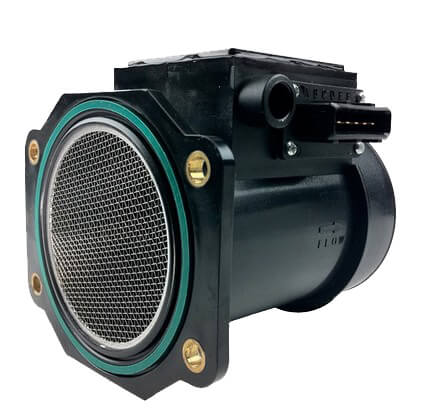
A mass airflow sensor detects the amount and density of air coming into the engine
The amount and mass of air entering the engine. If the sensor is faulty or even dirty, the computer can’t get the right amount of fuel into the engine. The MAF sensor is usually located in the air duct between the air filter box and the throttle body. It’s held in place by two clamps. Remove it and examine it for debris clogging the sensing element. Or, try cleaning it. See this post on how to clean a MAF sensor
Bad engine coolant temperature sensor, connector, or wiring harness issue— If the sensor is bad and reports that the engine is warmer than it is, the computer will command a much leaner; one that’s too lean to start the engine. The same thing can happen if the ambient air temperature sensor is bad. See this post for more instructions on how to test a coolant temperature sensor.
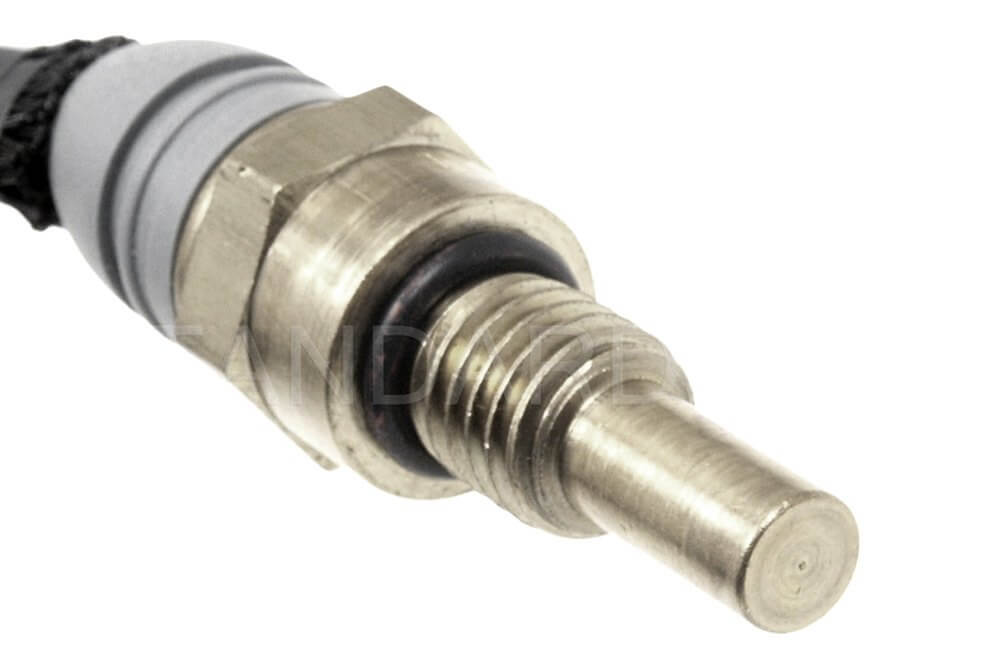
Coolant temperature sensor
Bad or carboned throttle body or idle air bypass valve — Carbon buildup on the throttle plate and bore, as well as the idle air bypass, can cause your car to struggle to start because it’s not getting enough air.
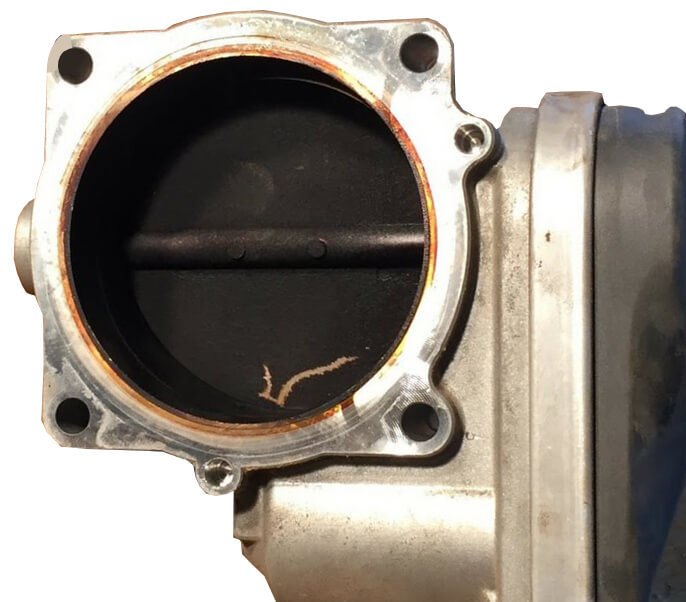
Carbon buildup in an electronic throttle body
Flooded engine in hot weather or when the engine is warmed up and won’t restart — Hard starting on a warm restart is most often caused by leaking fuel injectors. The fix is the same as a cold no-start.
Depress the gas pedal to the floor and hold it there while you crank.
Crankshaft issue — This is a generalization: The crankshaft sensor is usually responsible for telling the computer when to fire the fuel injectors. The camshaft sensor controls the spark plugs. Usually, these sensors either work or they don’t. But they can sometimes cause intermittent no-start issues and that usually happens on a hot restart. However, it doesn’t hurt to double-check the electrical connections to both sensors to confirm there’s no corrosion.
The car struggles to start due to a spark-related issue
Worn spark plugs are the #1 cause of no-start issues, especially in cold water
The plugs may have worked fine all Summer and Fall but the
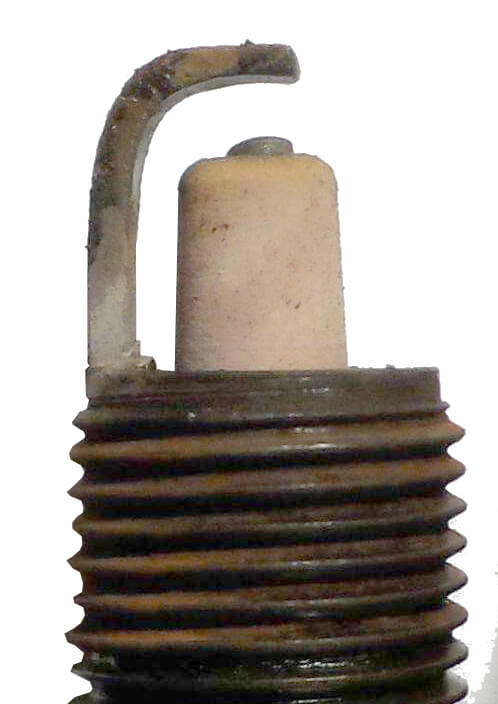
Worn spark plugs with a rounded center electrode and excessively
worn electrodes have a much harder time igniting fuel on a cold day.
As a spark plug wears, the center electrode rounds off and the gap between the center and side electrode widens. So it takes a higher voltage to jump the gap. The ignition coil can provide a higher voltage, but that comes at the cost of a shorter spark duration and a colder spark. That makes it harder to ignite cold fuel.
It’s a myth that all spark plugs last 100K or more miles. The opposite is true. In many late-model engines, spark plugs, even the latest iridium plugs, must be changed as often as 30K, 40K, or 60K miles. If you neglect spark plug changes on either a turbocharged engine or a non-turbo lean burn engine, you’ll wind up with a car that struggles to start.
Unfortunately, there’s no easy way to determine the condition of your spark plugs without removing them, and if they’re worn, there’s no other way to fix the problem other than to replace them
How long do spark plugs last? It’s not as simple as you think. See this post on spark plug life and when to change them.
Other things to check that can cause your car to struggle to start.
Really dirty engine air filter
Clogged fuel filter (rare)
© 2012 Rick Muscoplat worn, there’s no other way to fix the problem, other than to replace them
How long do spark plugs last? It’s not as simple as you think. See this post on spark plug life and when to change them.
Other things to check that can cause your car to struggle to start.
Really dirty engine air filter
Clogged fuel filter (rare)
© 2012 Rick Muscoplat
Posted on by Rick Muscoplat