
How Long Car Batteries Last: The Complete Guide
When to Replace a Car Battery
Quick Summary
If you’re wondering how long car batteries last, here’s the latest stats: the average lifespan of a modern car battery is typically 3 to 4 years. However, battery life depends heavily on climate, your driving habits, charging system performance, and vehicle electrical demands. Here’s what shortens car battery life:
Excessive heat — Heat is the #1 killer of car batteries.
Frequent short trips — Starting the engine and then driving short distances pulls more power out of the battery than the charging system can replace during a short drive. That causes the battery to remain in a constantly discharged state that reduces battery life.
Long periods of inactivity — All car batteries self-discharge when not used. Plus, all modern vehicles draw a small amount of power from the battery at all times. That small power draw can completely drain a battery in 4-6 weeks of inactivity. When you combine short trips with infrequent use, the battery can drain in just a few weeks.
High electrical loads in modern vehicles can shorten battery life. Most modern vehicles can handle the high current electrical loads listed below, as long as you drive at highway speeds and for long distances. However, if you drive in stop-and-go traffic or over short distances while running these high loads, you place incredible strain on the vehicle’s charging system and shorten battery life.
• Headlights
• Heater or AC
• Heated seats
• Rear window defogger
• Heated mirrors,
• ADAS systems
• High-powered sound systems.
Warning signs that a battery needs replacement
• Slow engine cranking
• Dim headlights
• Battery warning lights
• Swollen battery cases
• Repeated jump-starts.
Most drivers should begin testing their battery annually once it reaches 3 years old.
How Long Car Batteries Last: The Real Answer
Years ago, it wasn’t unusual for a battery to survive five or even six years. Today, many batteries begin showing signs of deterioration after only three to four years. Modern vehicles contain dozens of electronic modules that continue drawing power even when the ignition is off. Combined with tighter engine compartments and increasing electrical demands, battery lifespan has steadily declined.
In my experience, the typical battery lifespan looks like this:
3–4 years: Average lifespan in most climates
4–5 years: Common for well-maintained vehicles driven regularly
Less than 3 years: Often caused by heat, undercharging, or infrequent driving
The key takeaway is that once a battery reaches three years old, it should be tested annually.
As an automotive technician, I’ve seen why: modern vehicles draw more power than ever, and drivers are taking more short trips, which leaves their batteries in a constant state of discharge. Also, families with multiple vehicles often leave their cars idle for extended periods, which can lead to early battery sulfation. Lastly, the engine compartment in later-model vehicles is packed tightly, so the battery absorbs more heat, reducing its lifespan.
What Causes Car Batteries to Wear Out?
Understanding how long car batteries last requires understanding what kills them.
Sulfation — the most common battery killer. When a battery remains partially discharged, lead sulfate crystals form on the battery plates. Initially, these crystals can be reversed through proper charging. However, if the battery remains discharged for extended periods, the crystals harden and permanently reduce battery capacity. This is one reason why vehicles that sit unused often experience premature battery failure.
Heat Damage — Many people blame cold weather for battery failures, but heat is actually the bigger enemy. High temperatures accelerate internal corrosion and increase electrolyte evaporation. Modern engine compartments are tightly packed, exposing batteries to more heat than ever before. Over time, excessive heat damages internal components and dramatically shortens battery life. Drivers in southern climates often replace batteries more frequently than drivers in northern states.
Short Trips and Undercharging — Short trips are surprisingly hard on batteries. Every engine start removes energy from the battery. If the vehicle is driven for only a few minutes, the alternator may not fully restore the energy before the engine is shut off again. Repeated short-trip driving leaves the battery in a chronic state of partial charge, accelerating sulfation and reducing lifespan.
Increased Electrical Loads — Today’s vehicles contain:
• Heated seats
• Heated steering wheels
• Advanced infotainment systems
• Multiple computers
• Radar sensors
• Cameras
• USB charging ports
• Wi-Fi hotspots
These systems place greater demands on both the alternator and battery than older vehicles ever experienced. As a result, modern batteries cycle more frequently and wear out faster.
For the longest battery life:
• Take at least one 20–30 minute drive every 7–10 days
• Or fully recharge with a maintainer once a month
• Avoid “trip stacking” short journeys without a longer drive in between
Vibration, Corrosion, and Poor Mounting Also Shorten Battery Life
A car battery is designed to withstand vibration—but not uncontrolled vibration. If the hold-down bracket is loose or missing, every bump and pothole accelerates internal plate damage.
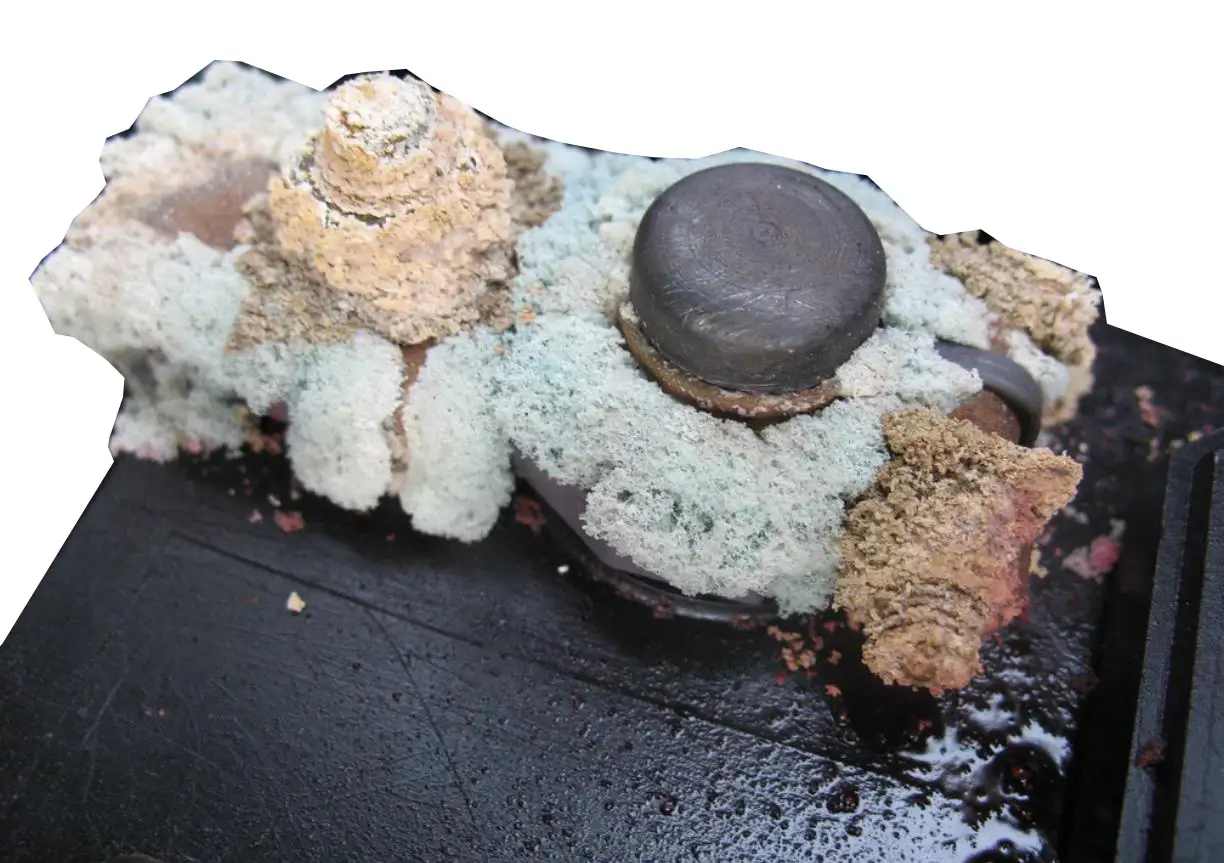
Notice the corrosion and the wetness on the top of the battery. This car battery is leaking between the case and the post
Corrosion on the battery terminals increases electrical resistance, preventing full charging and leaving the battery permanently undercharged. Once again, sulfation follows.
I always tell drivers:
Clean your battery terminals once a year and make sure they are firmly clamped.
How to Make Your Car Battery Last Longer Than Average
If you want to stretch how long a car battery lasts on average, here are the most effective steps:
• Drive longer trips regularly
• Avoid letting the car sit for weeks
• Use a battery maintainer when not driving for long periods
• Keep terminals clean and free of corrosion
• Check that the battery is properly secured
• Have the battery tested annually
A modern conductance tester can give an accurate pass/fail result in seconds. Most auto parts stores will test your battery for free.
Give your battery an annual checkup

A modern battery tester can test your battery in seconds, giving you a pass/fail results. They’re very accurate
Modern battery testers can accurately diagnose your battery’s condition, giving you a simple pass/fail result. Any auto parts store will test your battery for free.
©, 2015 Rick Muscoplat
Posted on by Rick Muscoplat