
Prevent a Dead Car Battery in Winter with These Tips
Prevent Winter Battery Failure: Tips to Keep Your Car Running
Nothing is more frustrating than finding yourself stranded with a dead car battery on a freezing morning. Fortunately, with some preventive measures, you can reduce the chances of your car battery failing when you need it most. This article will guide you through practical steps to prevent a dead car battery in winter.
First, understand why car batteries die in winter
Cold Temperatures Slow Down Chemical Reactions— Car batteries generate electricity through a chemical reaction. Cold temperatures slow down these chemical reactions, reducing the battery’s ability to produce and deliver electricity.
A typical car battery at 32°F (0°C) can only produce about 65% of its normal capacity. At 0°F (-18°C), that capacity drops to just 40-50% capacity. This means that even a healthy battery produces less power in cold weather, which can lead to starting difficulties. That’s why it’s so important to make sure the battery is recharging properly.
Cold weather means increased starter demands on your battery— A cold engine means thicker motor oil and that requires more power from the battery, which is already operating at almost half its normal capacity. That means the engine doesn’t crank as fast, making it harder to the engine to fire up.
You use more electrical accessories in winter— You use your rear window defogger, seat heaters, and headlights more in winter than in summer. That increases electrical demands on your battery. .
Your charging system has to work harder in cold weather— If the alternator or charging system is not working properly, the battery may not receive a full charge while driving. In winter, when the battery is already under strain, insufficient charging can lead to a dead battery.
Short trips in winter cause more battery discharge than the same short trips in summer— A cold battery is already starting at a deficit due to the cold weather. If you then start the engine, turn on all your normal winter electrical accessories, and take a short trip, your charging system won’t run long enough to replace all that lost power, and the battery will sit in a discharged state. A discharged battery can freeze and that kills the battery.
Step-by-step guide to prevent a dead car battery in winter
1) Clean the battery terminals— Corrosion on your battery terminals is the single best way to prevent a dead battery in winter. Corrosion increases electrical resistance, which prevents your battery from getting a full charge. The corrosion also puts a strain on the alternator. a major cause of a dead car battery in winter weather. See this post for step-by-step instructions on how to clean your battery terminals and posts.
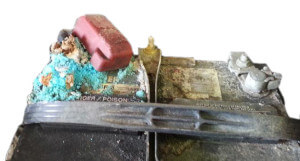
Look at the corrosion on these battery cables. And you wonder why it won’t start?
Even if you don’t see corrosion like the image on the right, that doesn’t mean there isn’t any. Clean your battery terminals at the start of winter.
2) Get your battery tested to determine its state of health
Modern battery testers test more than just 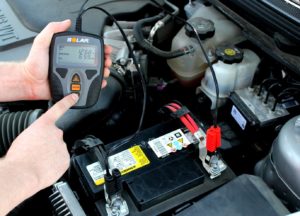 voltage and amperage capacity. They also test internal resistance and conductance which is a sign of overall battery health. Typical battery life is 3-4 years. So testing your battery can give you a heads up of an impending dead car battery long before it leaves you stranded.
3) Take a 20-minute highway trip at least once every ten days in cold weather
Short trips in cold weather are a major battery killer. Any trip 10 miles or less in winter is considered a short trip. Lots of those trips will run your battery down. You have two choices to prevent a dead car battery in winter if you take lots of short trips:
1) Buy a battery maintainer and connect it to your battery once a week to bring it back up to full charge, or
2) Drive your car at highway speeds for 20-30 minutes every 10 days to fully charge your battery.
See this post on battery chargers and maintainers.
4) Don’t let your car sit unused for long periods in winter
Lead acid batteries self-discharge at about 1% per day in cold weather. That’s with no load applied. Unfortunately, all modern vehicles draw a constant load of around 50 milliamps when the car isn’t running. That’s the power needed to run the anti-theft alarm, remote keyless entry modules, and to keep alive memory. Put all that power drain together, and you’re looking at a dead car battery after about 30 days with no driving.
If you don’t drive your car often, use a battery maintainer or battery charger to keep your battery healthy.
See this post on how to buy a jumper pack
©, 2019 Rick Muscoplat
Posted on by Rick Muscoplat