
Top Causes of Engine Overheating and How to Fix Them
Engine Overheating: The Most Common Causes and How I Diagnose Them
Quick Summary
Engine overheating is usually caused by a cooling system problem—not a failed engine. Low coolant, a stuck thermostat, a bad radiator fan, a clogged radiator, a worn water pump, or a leaking head gasket are responsible for most overheating complaints. The key is to diagnose the cause early, before severe engine damage occurs.
Engine Overheating: Don’t Assume the Worst
When I diagnose engine overheating, I never jump to conclusions. After decades of working on cooling systems, I’ve learned that an overheating engine is usually the result of a small problem that’s been ignored until the cooling system reaches its limit.
The good news is that most overheating problems can be found quickly if you follow a logical diagnostic process. Catching the problem early can prevent warped cylinder heads, blown head gaskets, and thousands of dollars in repairs.
The Most Common Causes of Engine Overheating
In my experience, these are the failures I see most often:
• Low coolant from a leak
• Stuck-closed thermostat
• Faulty electric or mechanical radiator fan
• Dirty or clogged radiator fins
• Internally clogged radiator
• Worn water pump
• Blown head gasket
1. Low Coolant Is the Number One Cause — The first thing I check is coolant level.
A cooling system that’s even slightly low can cause an engine to overheat, especially while idling or driving in stop-and-go traffic. Common leak locations include:
• Radiator hoses
• Heater hoses
• Water pump
• Radiator
• Heater core
• Coolant reservoir
If you have to add coolant more than once a year, you have a leak that needs to be repaired—not ignored.
2. A Bad Thermostat Restricts Coolant Flow — A thermostat regulates coolant flow between the engine and radiator. When it sticks closed or only opens partway, coolant can’t circulate fast enough to remove engine heat. Replacing a thermostat is inexpensive compared to repairing an overheated engine.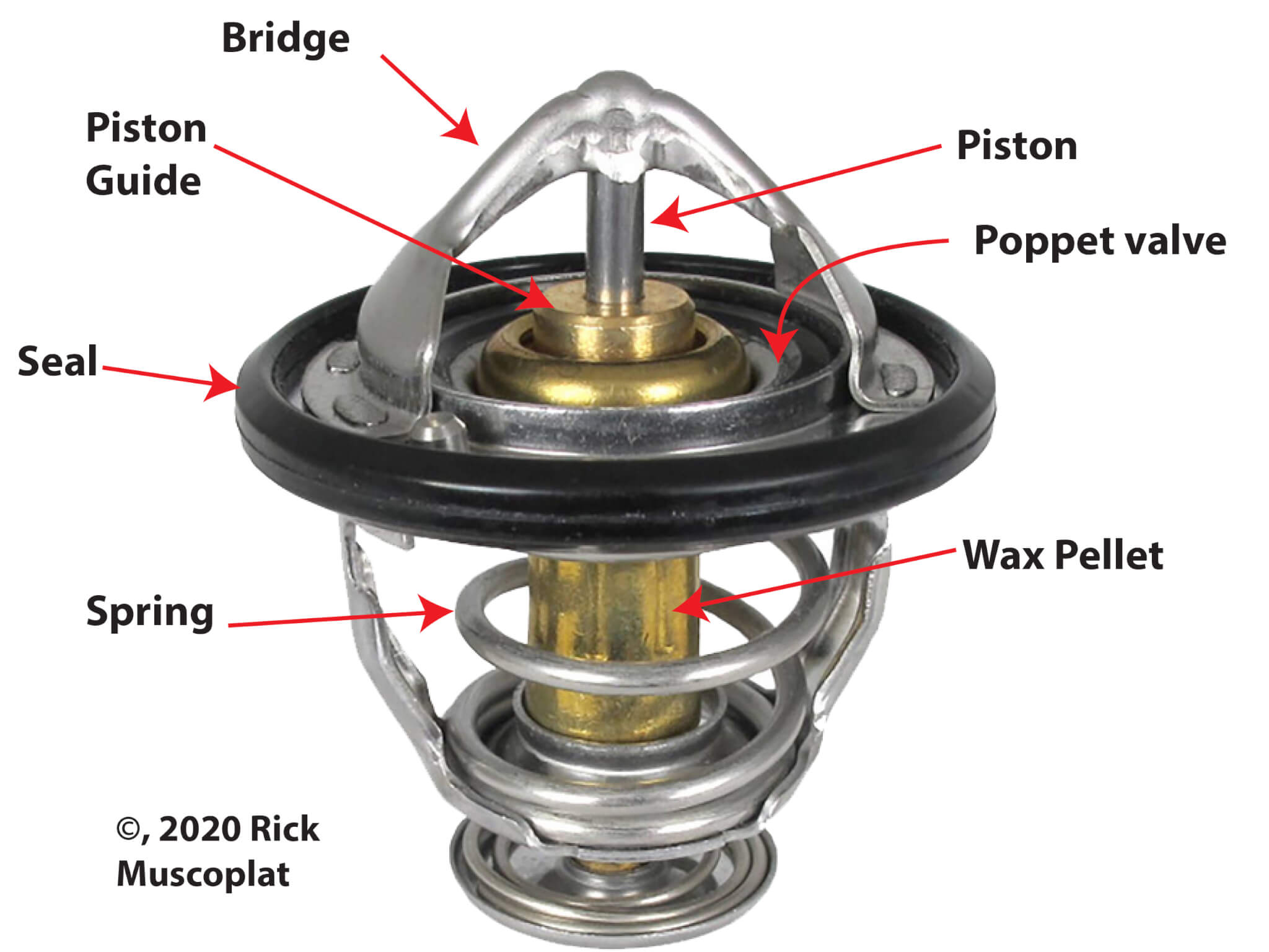
Common bad thermostat symptoms include:
• Temperature gauge rises quickly
• Heater blows cold air
• Upper radiator hose stays cool after warm-up
• Engine overheats within minutes
3. A Failed Radiator Fan Causes Overheating at Idle — If your vehicle overheats while sitting in traffic but cools down once you’re driving, suspect the radiator fan.
Electric fans may fail because of:
• Blown fuse
• Bad relay
• Failed fan motor
• Faulty coolant temperature sensor
• Wiring problems
Vehicles with mechanical fans can develop worn fan clutches that reduce airflow at idle.
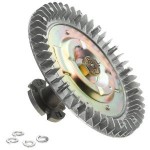
Viscous fan clutch controlled by bi-metallic coil
A simple test is turning the air conditioning to MAX. On many vehicles, the electric cooling fan should turn on almost immediately. If it doesn’t, further testing is needed.
Late-model systems:
But those were the early systems. The newer
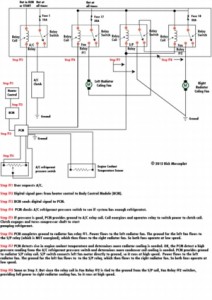
Click on this to open PDF
systems are far more complicated. The PCMs in these systems take into account not only engine temperature, but AC pressures, the position of the accelerator pedal (cuts off AC during heavy acceleration to reduce engine load), and transmission fluid temperatures. Click on the PDF below to see how complicated they’ve become. But that doesn’t mean you can’t diagnose them. Just follow my step-by-step instructions
Also, notice that many of these systems use two-speed fans. So the fact that an electric radiator fan is running at idle doesn’t mean it will run at full speed later.
A head gasket leak can cause engine overheating
Head gaskets can fail in many different ways: by allowing oil into the coolant, coolant into the oil, or coolant into the combustion chamber, which causes white smoke from the exhaust, OR combustion gases to enter the cooling system.
If the head gasket fails between the combustion chamber and the cooling system, the engine will pump red-hot combustion gases into the coolant, superheating it and sending your temperature gauge to the moon.
4. Dirty Radiator Fins Reduce Cooling — The radiator can’t remove heat if air can’t pass through it.
Over time, bugs, dirt, leaves, and road debris clog the air-conditioning condenser and radiator fins.
I recommend inspecting the front of the radiator every year and gently cleaning it with a garden hose. Never apply excessive pressure, as it can bend the delicate cooling fins.
5. A Clogged Radiator Restricts Coolant Flow — Old coolant eventually breaks down, allowing corrosion to build inside the radiator tubes.
A partially clogged radiator often causes:
• Engine overheating
• Uneven radiator temperatures
• Poor heater performance
• Overheating while climbing hills
An infrared thermometer makes diagnosis much easier. Cold spots across the radiator usually indicate restricted coolant flow.
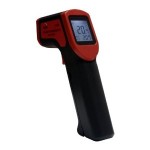
Non-contact infrared thermometer
With the engine running and thermostat open, just point it at the fins near the upper radiator hose. Then scan it across and down the radiator. You’ll be looking for cold spots. That indicates a blockage. If you find any, don’t waste your time cleaning the radiator. The flushing chemicals can remove some of the buildup, but experience shows that by that point, the corrosion has eaten up so much metal that you’ll be left
6. A Worn Water Pump Can’t Move Enough Coolant — The water pump circulates coolant through the engine and radiator. As the impeller wears or loosens, coolant flow decreases. A failing water pump rarely improves with time—it only gets worse.
Watch for:
• Coolant leaks from the weep hole
• Grinding or whining noises
• Bearing play
• Poor coolant circulation
7. A Blown Head Gasket — A leaking head gasket is the most serious cause of engine overheating, but fortunately, it’s far less common than most people think.
Warning signs include:
• White exhaust smoke
• Coolant loss with no visible leak
• Coolant reservoir overflowing
• Rock-hard radiator hoses
• Engine misfire
• Milky engine oil
Combustion gases entering the cooling system can rapidly overheat the engine and create excessive pressure.
Don’t Ignore Airflow Problems
Many drivers overlook damaged cooling-system components that direct airflow.
Missing fan shrouds, radiator seals, splash shields, or the lower air dam can significantly reduce cooling efficiency, especially at highway speeds. Always reinstall these parts after repairs because they’re engineered to force air through the radiator rather than around it.
Final Thoughts
Most cases of engine overheating begin with a minor cooling-system problem that worsens over time. That’s why I always start with the basics: check coolant level, inspect for leaks, verify thermostat operation, confirm the radiator fan works properly, and examine the radiator for restrictions before assuming the worst.
The sooner you diagnose an overheating problem, the better your chances of avoiding catastrophic engine damage.
© 2012 Rick Muscoplat
Posted on by Rick Muscoplat