
Why You Should Never Use Belt Dressing to Stop Belt Noise
Why Belt Dressing Makes Belt Noise Worse
Quick Summary
If you’re hearing belt noise and thinking about reaching for a can of belt dressing, stop. Modern vehicles use EPDM serpentine belts that are designed to run dry. Belt dressing was created decades ago for older neoprene V-belts and is no longer recommended by belt manufacturers or automakers. In fact, belt dressing can damage modern belts, attract dirt, increase belt wear, contaminate pulleys, and hide the real cause of belt squeal.
• Belt dressing is an outdated product designed for older belt materials.
• Modern EPDM serpentine belts should never be sprayed with belt dressing.
• Belt dressing can soften the belt rubber and shorten the belt’s life.
• It attracts dirt and debris that accelerate wear.
• Belt squeal is usually caused by a worn belt, a bad tensioner, pulley misalignment, or bearing failure.
• Fixing the root cause is the only permanent solution.
Why I Never Use Belt Dressing to Fix Belt Noise
After decades of working as an ASE Master Technician and automotive editor, I’ve seen countless drivers try to cure a squealing belt with a quick spray of belt dressing.
The result is almost always the same: The noise disappears for a few days, maybe a few weeks, and then comes back worse than before.
Many people assume belt squeal means the belt is “dry” and simply needs some kind of conditioner. That’s a myth that refuses to die. Modern serpentine belts don’t need conditioning, lubrication, or chemical treatments. They need proper tension, alignment, and clean pulley surfaces.
Whenever I hear someone suggest belt dressing, I know they’re applying a 1970s-era solution to a vehicle built in the 2020s.
What Is Belt Dressing?
Belt dressing is a sticky chemical spray originally developed for older neoprene V-belts. Most cans contain:
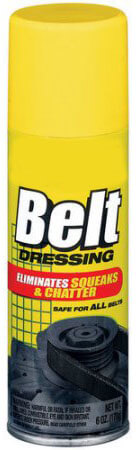
NEVER apply ANY kind of lubricant or belt dressing to an automotive belt. It NEVER fixes the underlying problem and just damages the belt and pulleys
• Petroleum-based formulas use naphtha, mineral spirits, or petroleum distillates as the carrier solvent, with a tacky resin or rosin as the friction-enhancing agent.
• Silicone-based formulas use polydimethylsiloxane (silicone oil) — these are more common in modern sprays and are gentler on belts.
• Rosin (colophony) is a traditional natural ingredient derived from pine resin. It’s the same substance used on violin bows and baseball bat grips — it’s sticky and increases friction between the belt and pulley.
Its purpose was simple:
• Increase friction temporarily
• Reduce belt slippage
• Quiet squealing belts due to slipping
Nearly every modern vehicle uses an EPDM serpentine belt driven by an automatic belt tensioner. These systems were never designed to use belt dressing.
Why Belt Dressing Doesn’t Fix the Problem
One of the biggest mistakes I see is treating belt noise as the problem.
It isn’t, because belt noise is a symptom. The real cause is usually one of these:
• Worn serpentine belt
• Weak automatic tensioner
• Pulley misalignment
• Bad idler pulley bearing
• Failing alternator bearing
• Worn A/C compressor clutch bearing
• Power steering pump issues
• Coolant or oil contamination
Spraying belt dressing simply covers up the symptoms while the underlying problem continues to worsen.
Belt Dressing Attracts Dirt Like a Magnet
One of the worst side effects is contamination. Belt dressing leaves behind a sticky residue that attracts:
• Dust
• Sand
• Road grime
• Rubber particles
Over time, that mixture becomes an abrasive grinding compound. I often compare it to spraying adhesive on your shoes and then walking through a sandbox. Everything sticks.
That contamination gets embedded into the belt ribs and pulley grooves, increasing wear on both components.
Belt Dressing Can Actually Make Belt Noise Worse
Ironically, the very product designed to stop belt squeal often creates more of it. As dirt accumulates on the treated belt surface:
• Friction becomes inconsistent
• Belt tracking suffers
• Pulley wear increases
• Squealing and chirping return
I’ve inspected vehicles where belt dressing transformed a minor chirp into a constant squeal.
Worse yet, it damages the belt and pulleys
1. It Softens and Damages EPDM Belts— EPDM is highly resistant to heat and wear, but the petroleum-based solvents in belt dressing attack the rubber compound. Instead of curing the belt squeal, they soften the surface, reducing grip. Over time, this accelerates wear and can lead to premature belt failure.
2. It Makes Serpentine Belt Noise Worse— Ironically, the very problem you’re trying to fix—serpentine belt noise—becomes worse with belt dressing. The chemicals create a sticky surface that collects dirt and grit. That abrasive layer acts like sandpaper on the pulleys, making the belt squeal louder and shortening the life of both the belt and pulleys.
3. It Masks the Real Problem— Belt squeal isn’t caused by a “dry” belt. It’s caused by one of three root issues:
• A worn belt with rib material that has lost its shape
• A failing tensioner that no longer keeps proper tension
• Misaligned pulleys that cause the belt to ride incorrectly
Spraying belt dressing temporarily hides the noise, while the actual issue worsens. That’s why every major belt manufacturer and OEM warns against using it on modern vehicles.
Why Belt Manufacturers Say “No” to Belt Dressing
Every major belt maker, including Gates, Dayco, and Continental, explicitly warns against using belt dressing on EPDM belts. Automakers also note that applying foreign chemicals to the belt or pulley system can void warranties. Simply put, if you spray belt dressing on your belt, you’re not only risking damage—you’re ignoring professional advice from the very companies that engineered the parts.
What Actually Causes Serpentine Belt Noise?
When I diagnose belt squeal, I focus on four common causes.
1. Worn Belt Ribs — EPDM belts don’t crack like older belts. Instead, the ribs wear down and lose their ability to grip the pulley grooves properly.
2. Weak Automatic Belt Tensioner — A weak tensioner allows the belt to slip under load. This is one of the most common causes of intermittent belt squeal.
3. Pulley Misalignment — Even slight pulley misalignment can cause:
• Chirping
• Squealing
• Edge wear
• Premature belt failure
4. Bad Bearings — A failing idler pulley, tensioner pulley, alternator bearing, or A/C compressor bearing can all create belt noise.
The Right Way to Fix Belt Squeal
Instead of spraying chemicals on the belt, follow these steps:
Inspect the Belt — Look for:
• Glazing
• Missing ribs
• Rib wear
• Contamination
• Check the Tensioner
Check the Tensioner — A weak or seized tensioner spring can’t maintain proper tension, allowing the belt to slip. If you notice excessive belt movement or hear chirping noises, replace the tensioner assembly.
• Excessive movement
• Weak spring tension
• Noise from the pulley bearing
Verify Pulley Alignment — A weak or seized tensioner spring can’t maintain proper tension, allowing the belt to slip. If you notice excessive belt movement or hear chirping noises, replace the tensioner assembly.
Use a straightedge or alignment tool to check pulley tracking.
Inspect Pulleys and Bearings — Spin each pulley by hand and check for:
• Roughness
• Noise
• Excessive play
• Replace Worn Components
Locate the belt noise 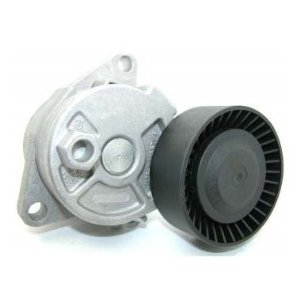
Automatic Belt TensionerHow to diagnose belt noise.
© 2012 Rick Muscoplat
Posted on by Rick Muscoplat